Chatbot Development Services for Scalable AI Assistants
At Coralsoft, we design, build, and integrate intelligent chatbots tailored to your workflows, users, and data — from LLM-powered assistants to full enterprise automation.
Chatbot development has crossed a critical maturity threshold, as LLMs have turned complex, context-aware assistants commercially viable and, what is more, advantageous. Modern businesses generally choose between the three main types of chatbots.
Type 01
Decision trees, scripted flows
low cost · limited scope
// type 01 — rule-based chatbots
Scripted paths. Predictable behaviour.
Decision-tree systems that follow rigid scripts. They excel at structured flows — appointment booking, FAQ deflection — but fail outside predefined paths. Low cost, limited scope.
02 · Architecture
How Chatbots Work: Architecture Overview
A production chatbot is not a single model — it is a layered system, where each layer is independently scalable — a design principle we maintain across every engagement.
01
User Layer
Web widget, mobile app, Slack/Teams, WhatsApp, API consumer
Platforms like Intercom, Drift, and Tidio lower the barrier to entry. But they impose hard ceilings. Here is where each option wins — and where it breaks down.
// 8 dimensions
Custom Development vs No-Code Builders
/ side-by-side
Dimension
Custom Development
No-Code Builder
Flexibility
Unlimited — any model, logic, data source
Constrained by platform features
Time to Market
4–8 weeks (MVP)
Days to 2 weeks
Upfront Cost
Medium–High (one-off build)
Low (subscription)
Total Cost of Ownership
Lower at scale — no per-seat fees
Grows linearly with volume
Scalability
Horizontal scaling, full control
Vendor-dependent limits
Data Privacy
On-prem or private cloud options
Data processed by vendor
Custom Integrations
Any system via API
Predefined connectors only
AI Model Choice
GPT-4o, Claude, Gemini, open-source
Locked to platform model
04 · Product types
Types of Chatbots We Build at Coralsoft
Every chatbot we deliver is purpose-built — not a repurposed template.
Customer Support Chatbots
01 / 04
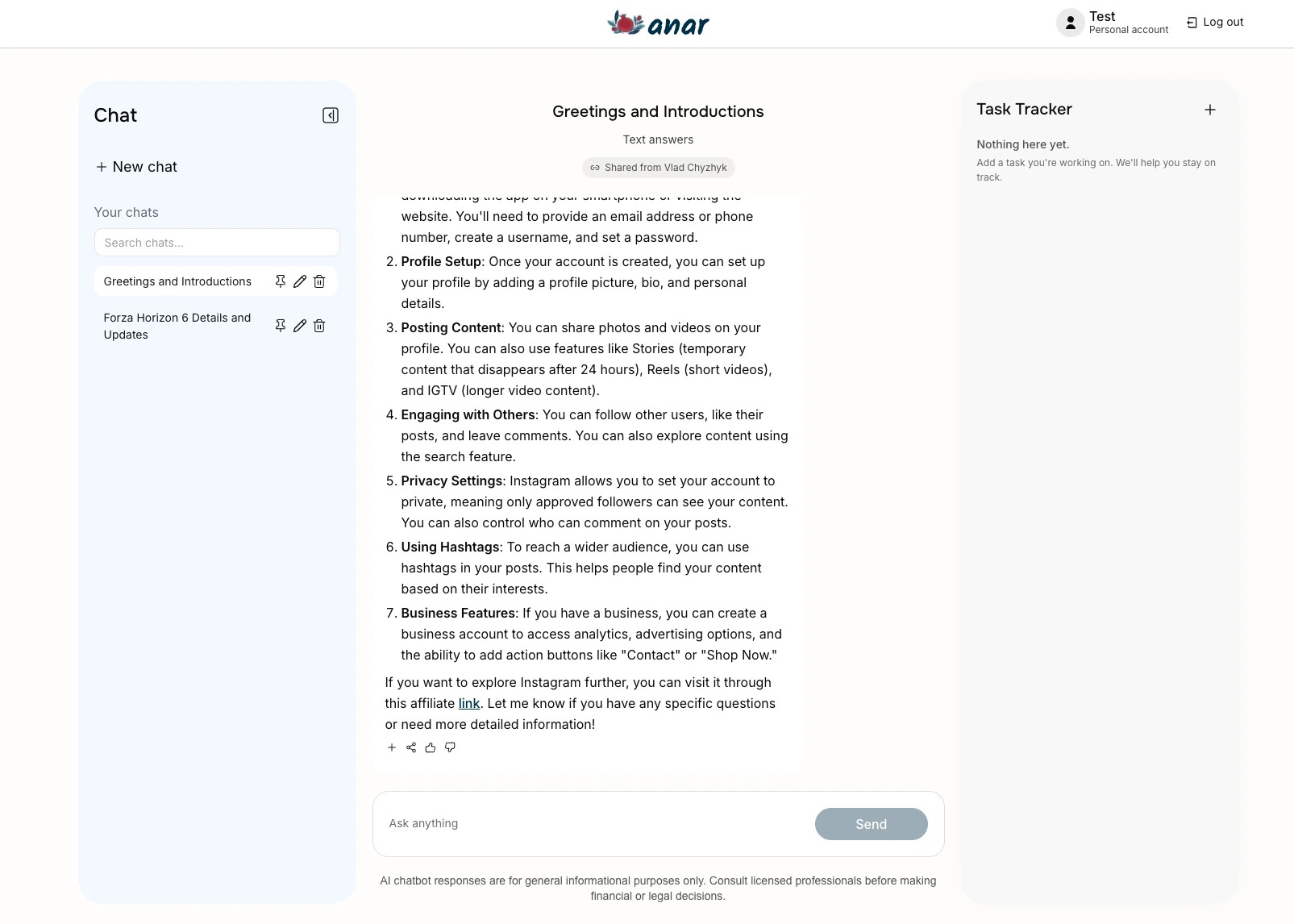
Triage, resolve, and escalate support tickets without human intervention. Integrated with your helpdesk, product documentation, and CRM — capable of handling returns, account queries, and technical troubleshooting at any volume.
AI Assistants
02 / 04
Context-aware, multi-turn AI assistants that reason across long conversations, retrieve from proprietary knowledge bases, and take actions via tool calls. Ideal for complex domains: legal, medical, financial, engineering.
Sales Chatbots
03 / 04
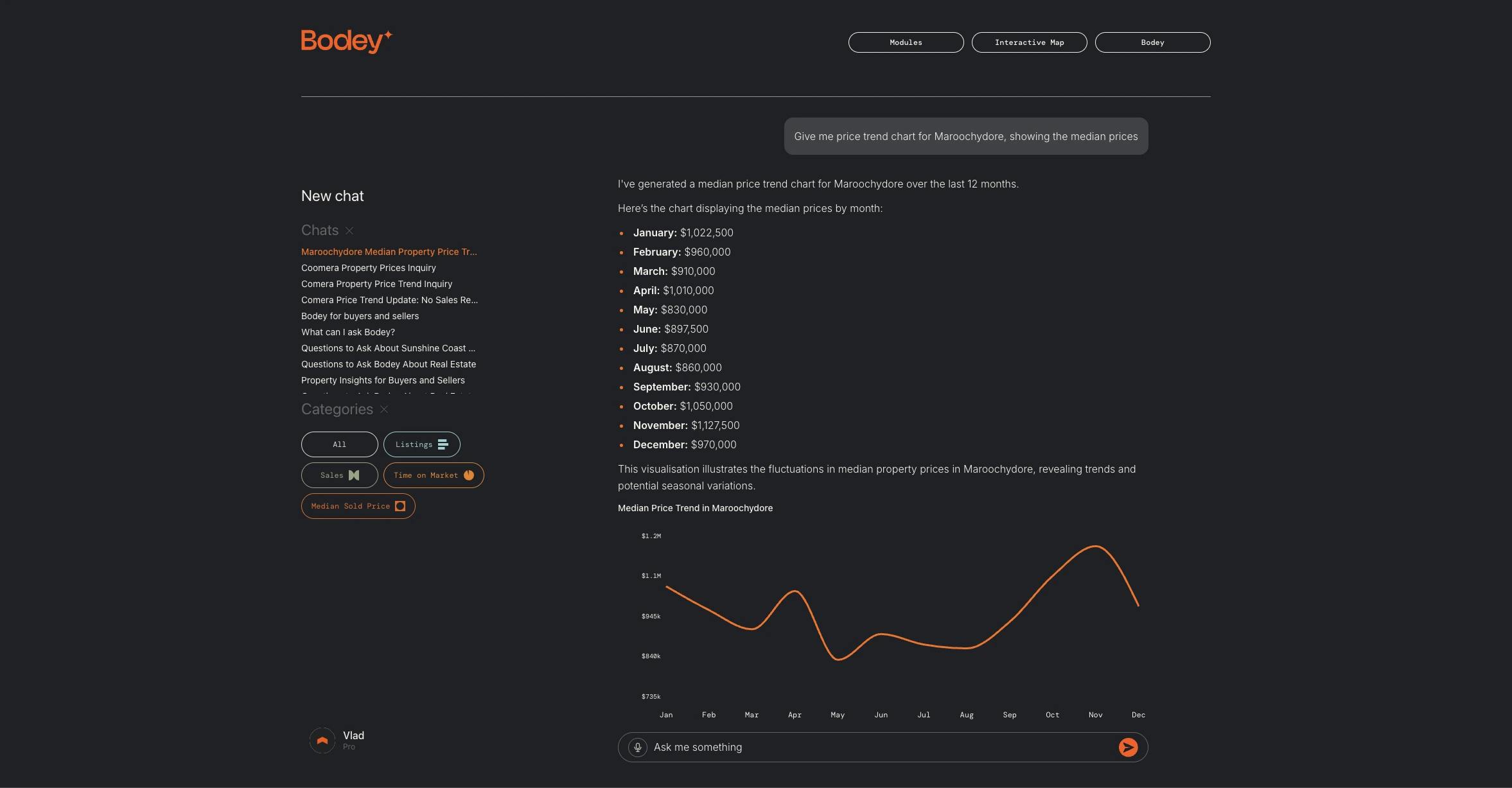
Qualify leads, answer product questions, and book demos — without requiring SDR time. Connected to your CRM, these bots identify intent signals and route high-value prospects directly to your pipeline.
Internal Automation Bots
04 / 04
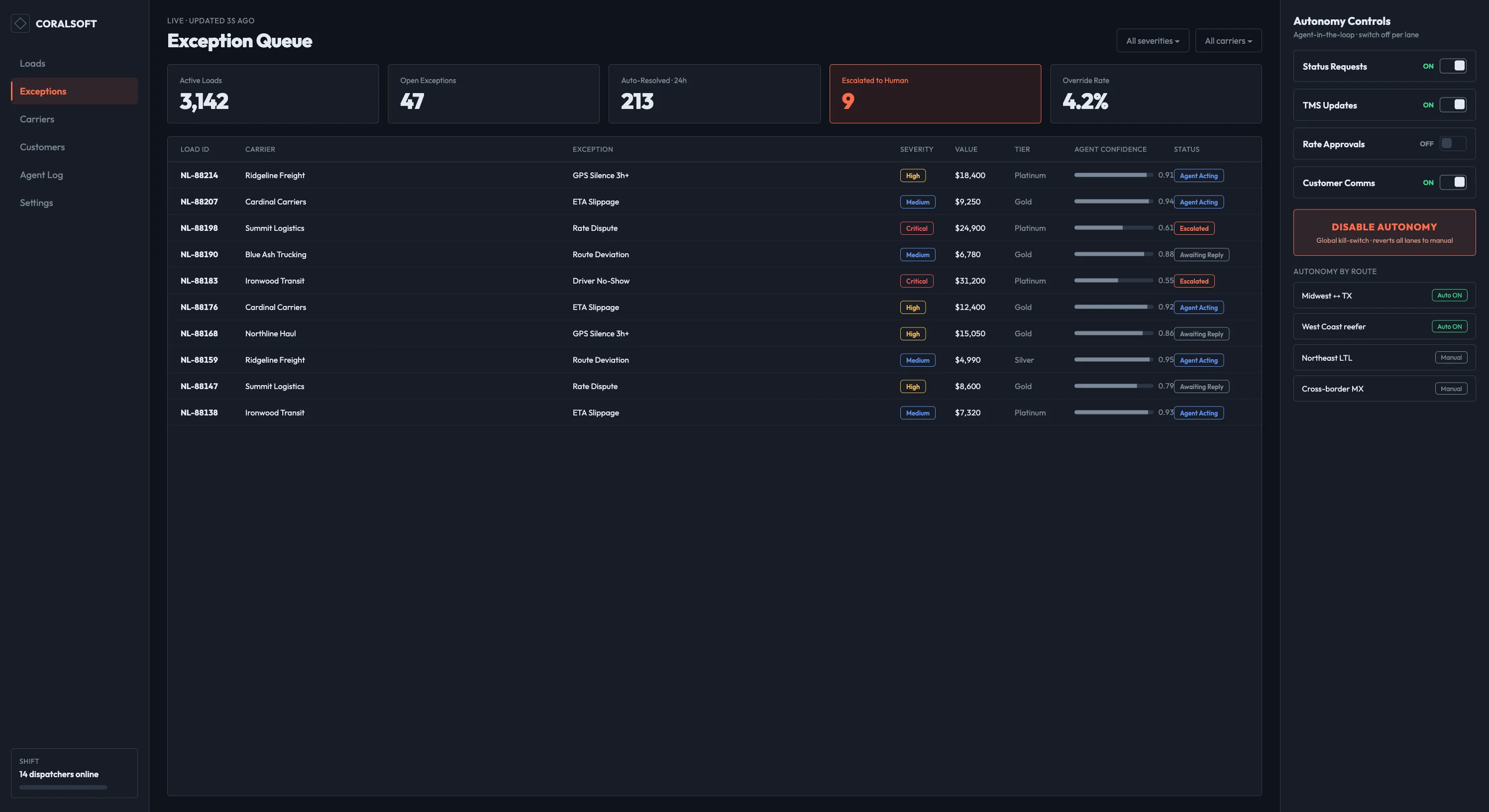
HR onboarding, IT helpdesk, operations reporting — deployed inside Slack, Teams, or your intranet. These bots reduce internal ticket volume, surface knowledge instantly, and automate repetitive workflows across departments.
05 · Process
Our Time-Proven Chatbot Development Process
We follow a structured seven-stage process designed to eliminate ambiguity, compress delivery time, and ensure every chatbot ships production-ready.
// 7 stages
From scope to scale, sign-off at every gate.
Each stage has a defined output and a sign-off gate. No stage begins until the previous one is confirmed.
01
DiscoveryRequirements & Use Case Mapping
Stakeholder interviews, conversation data analysis, and integration audit. We define scope, success metrics, and guardrails before writing a line of code.
02
DesignConversation Design & UX
Intent mapping, dialogue flows, and fallback strategies. We design for edge cases — not just the happy path.
03
DevelopmentBuild & Integration
LLM wiring, RAG pipeline construction, backend logic, and API integrations. Delivered in two-week sprints with demo checkpoints.
04
Training & EvaluationModel Training & QA
Fine-tuning (where applicable), prompt optimisation, automated regression testing, and red-teaming for adversarial inputs.
05
DeploymentStaging & Production Launch
Containerised deployment (Docker/Kubernetes), load testing, and phased rollout with traffic shadowing. Zero-downtime migration from existing solutions.
06
MonitoringAnalytics & Observability
Conversation dashboards, intent accuracy tracking, CSAT loops, and cost-per-query monitoring. Every deployment includes a 30-day hypercare period.
07
OptimisationContinuous Improvement
Monthly model updates, intent coverage expansion, and A/B testing on conversation variants. Your chatbot improves every quarter.
06 · Pricing
Chatbot Development Cost Breakdown
Cost to build a chatbot varies by complexity, integrations, and AI model selection. Below are reference ranges based on 200+ engagements. All figures are one-off build costs — not recurring SaaS fees.
// 3 tiers
Tier
Starter MVP
Growth / Production
Enterprise
Cost Range
$7K–$15K
$15K–$50K
$50K–$120K
Delivery
4–8 weeks
8–12 weeks
12–16 weeks
Integrations
1–2
3–6 + RAG
Full stack
AI Model
GPT-4o mini
GPT-4o / Claude Sonnet
Custom fine-tuned
Deployment
SaaS / cloud
Multi-channel cloud
Private / on-prem
07 · Industries
Chatbot Use Cases by Industry
We have delivered chatbot solutions across regulated and high-growth sectors. Each domain brings unique data, compliance, and conversation requirements.
SaaS
01 / 04
In-app onboarding assistant
Feature discovery bot
Churn intervention flows
Billing and account self-service
Healthcare
02 / 04
Appointment scheduling
Medication reminders
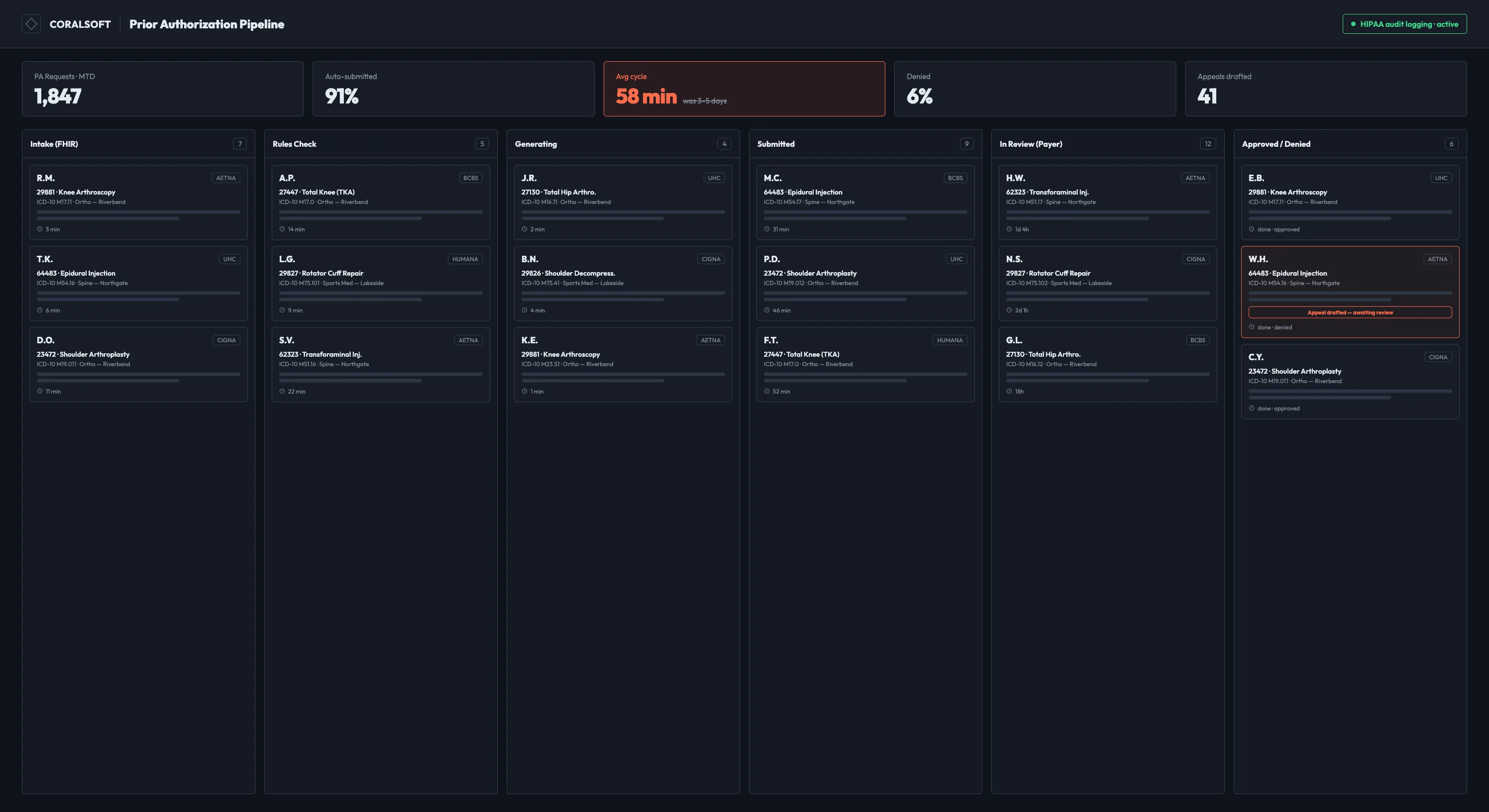
HIPAA-compliant clinical Q&A
Patient intake and triage
Fintech
03 / 04
KYC document collection
Transaction dispute handling
Loan eligibility screening
Fraud alert communication
eCommerce
04 / 04
Order tracking and returns
Product recommendation engine
Post-purchase support
Cart abandonment recovery
08 · Integrations
Integrations & APIs
A chatbot is only as useful as the systems it can read from and write to. We build deep, reliable integrations — not shallow webhooks.
// 6 categories
CRM & Sales
01 / 06
SalesforceHubSpotPipedriveZoho CRM
Helpdesk
02 / 06
ZendeskIntercomFreshdeskServiceNow
Messaging Channels
03 / 06
SlackMS TeamsWhatsAppTelegram
ERP & Operations
04 / 06
SAPNetSuiteJiraConfluence
Automation Platforms
05 / 06
ZapierMaken8nCustom Webhooks
AI & Data
06 / 06
OpenAI APIAnthropicPineconeWeaviate
09 · Why custom
Why Choose Custom Chatbot Development
Off-the-shelf tools are excellent for validation. Custom development is necessary for competitive differentiation. Here is when the case becomes clear.
01
You handle sensitive or proprietary data
Healthcare, fintech, legal, and government use cases require data residency controls, on-premise deployment, or private model hosting — impossible with consumer SaaS chatbot platforms.
02
Your workflows are non-standard
If your support, sales, or internal processes have more than three decision branches, no-code builders will require painful workarounds that break under load.
03
You need multi-system orchestration
Chatbots that write to CRM, read from ERP, and trigger helpdesk tickets simultaneously require orchestration layers that pre-built platforms simply do not support.
04
Scale makes SaaS fees prohibitive
At 50,000+ monthly conversations, most chatbot SaaS platforms become cost-negative against a custom build. The crossover point typically arrives within 12–18 months.
10 · Selected work
Case Studies
Coralsoft chatbot development experts have delivered measurable success across chatbot design and building avenues.
Ideal for organisations building multiple AI products or requiring ongoing development cadence.
// ongoing engagementRecommended
Fixed Price
02
Suitable for well-defined MVPs and organisations requiring predictable budget approval.
// defined scopeFixed
Time & Materials
03
Common in research-heavy or regulated environments where scope changes are frequent.
// hourlyFlexible
12 · FAQ
FAQs
Concise answers to the five questions we hear most before kick-off. Anything else, ask us directly.
13 · Get in touch
Let’s Create Your Business Accelerator
Tell us your use case. We will map the right architecture, identify integration dependencies, and give you a realistic cost estimate — in one 30-minute call. No obligation.
30-minute discovery call
Architecture map & integration dependencies
Realistic cost estimate, in writing
No obligation, no follow-up pressure
The cost to build a chatbot starts from $7K for a focused single-use-case MVP, $15K for a production-grade chatbot with multiple integrations and a RAG pipeline, and $50K for enterprise deployments with custom model training, private hosting, and compliance reviews. The primary cost drivers are the number of integrations, complexity of the conversation logic, AI model selection, and compliance requirements.
A focused MVP typically ships in 4–8 weeks. A production-grade chatbot with multiple integrations, RAG pipeline, and full QA takes 8–12 weeks. Enterprise deployments with custom model training and compliance reviews run 12–16 weeks. We publish a detailed delivery timeline after the discovery sprint, before any code is written.
Rule-based chatbots operate on decision trees — they follow predefined scripts and fail when users deviate from expected inputs. AI chatbots backed by large language models understand intent from natural language, handle ambiguous or novel questions, maintain context across multi-turn conversations, and can retrieve from external knowledge bases in real time. The best chatbot development software today combines both: LLMs for language understanding, with rule-based guardrails for critical business logic paths.
Use a builder if you need proof of concept in under two weeks, have under 500 conversations per month, and do not have proprietary data security requirements. Invest in custom chatbot development when you need deep CRM/ERP integrations, private data handling, high conversation volume, or differentiated AI capabilities that no-code platforms cannot replicate.
Custom chatbots can integrate with any system that exposes an API — CRMs (Salesforce, HubSpot), helpdesks (Zendesk, Freshdesk), ERPs (SAP, NetSuite), messaging platforms (Slack, Teams, WhatsApp), automation platforms (Zapier, Make), and custom internal databases. We also build against vector databases (Pinecone, Weaviate) for knowledge retrieval and connect to AI providers including OpenAI, Anthropic, and Google for NLP processing.