Anar // AI financial assistant for NRIs
RAG-powered AI guidance for cross-border NRI financial decisions
Anar is a production AI financial assistant created for Non-Resident Indians who need clearer guidance across cross-border financial decisions. The platform supports users dealing with NRE/NRO banking, FEMA-related questions, tax-treaty considerations, mutual funds, and long-term investment planning — providing a conversational interface that delivers contextual answers and turns recommendations into practical next steps.
The client needed a scalable AI product that could support complex financial conversations while remaining secure, fast, and production-grade. The challenge was unifying multiple product layers into one coherent system: a streaming AI chatbot, a retrieval-augmented knowledge base, user personalisation, task tracking, onboarding, billing, and admin workflows — on a data architecture with protected user access, vector search, and headroom to grow as the corpus and user base expand.
The product surface
Coralsoft delivered the platform as a full-stack AI application using Next.js 15, TypeScript, Supabase, OpenAI GPT-4o and Tailwind CSS v4. The frontend uses the App Router with React 19 and TanStack Query v5 for cache, optimistic UI and background invalidation. The API layer splits across runtimes: Node.js for the chat pipeline (longer-running, tool-rich), Edge runtime for fast knowledge-base retrieval. Postgres carries 25+ tables under RLS, with pgvector enabling cosine similarity search behind the RAG pipeline.
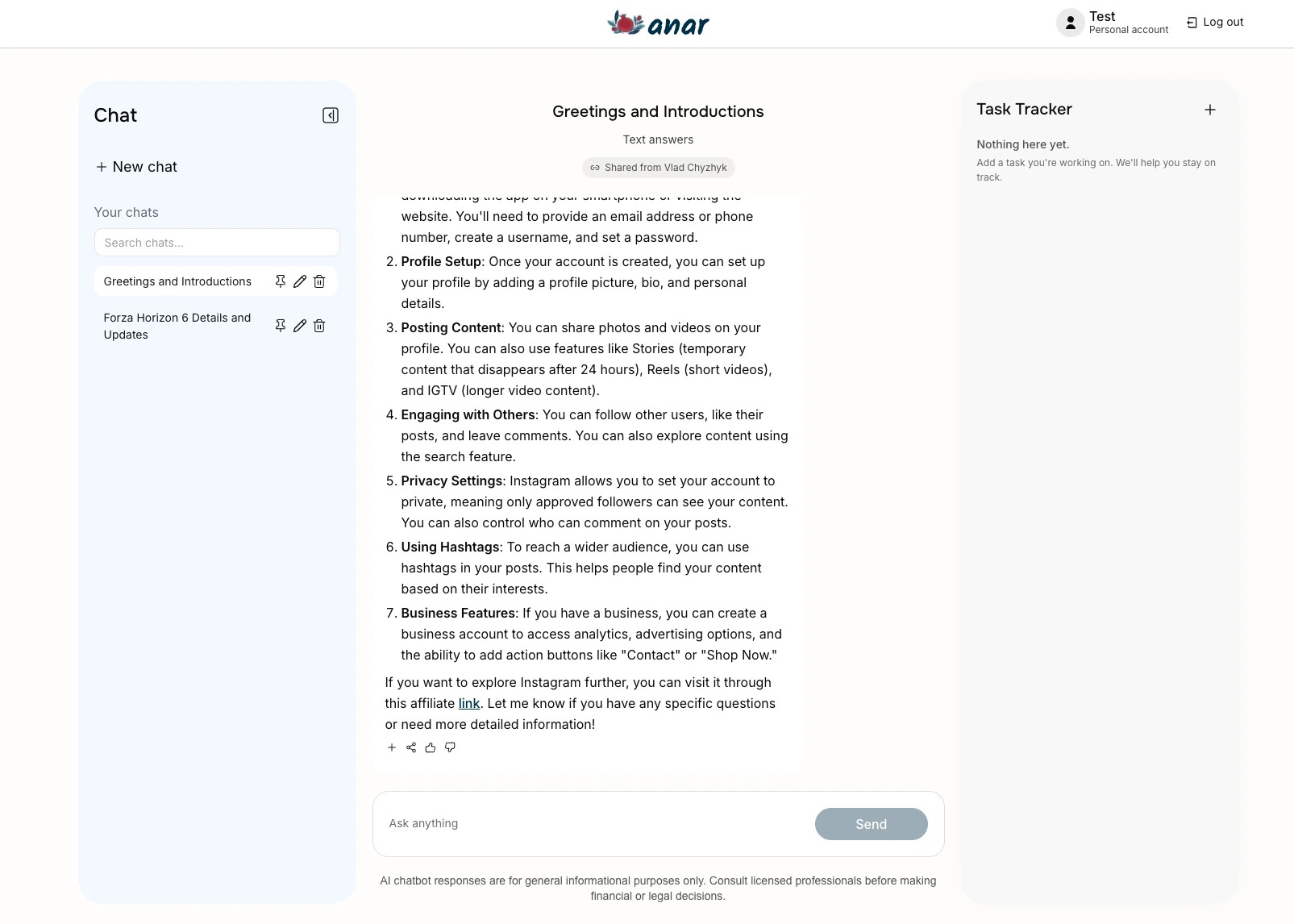
Streaming AI chatbot
Real-time conversational assistant for complex cross-border financial questions, returning contextual answers grounded in retrieved knowledge — not generic LLM output.
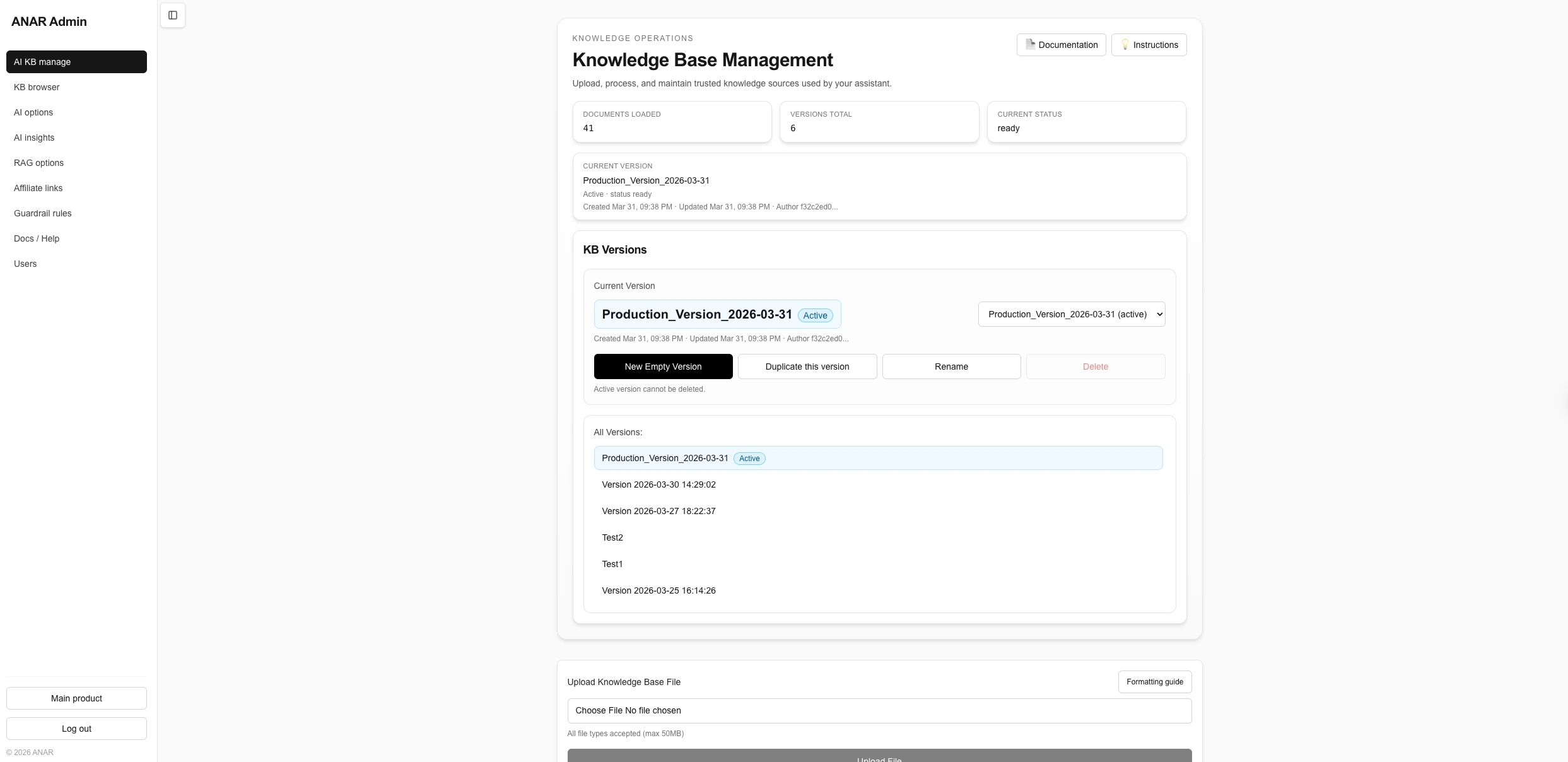
RAG knowledge pipeline
GPT-4o connected to a structured financial knowledge base via pgvector cosine similarity search — every answer is anchored to retrievable, citable source material.
Personalisation layer
User context (residency, life stage, account types, investment goals) is woven into retrieval and prompting so recommendations are relevant to each individual situation rather than generic.
Task tracker
AI-generated recommendations are converted into concrete action items the user can work through over time — bridging the gap between financial advice and real-world execution.
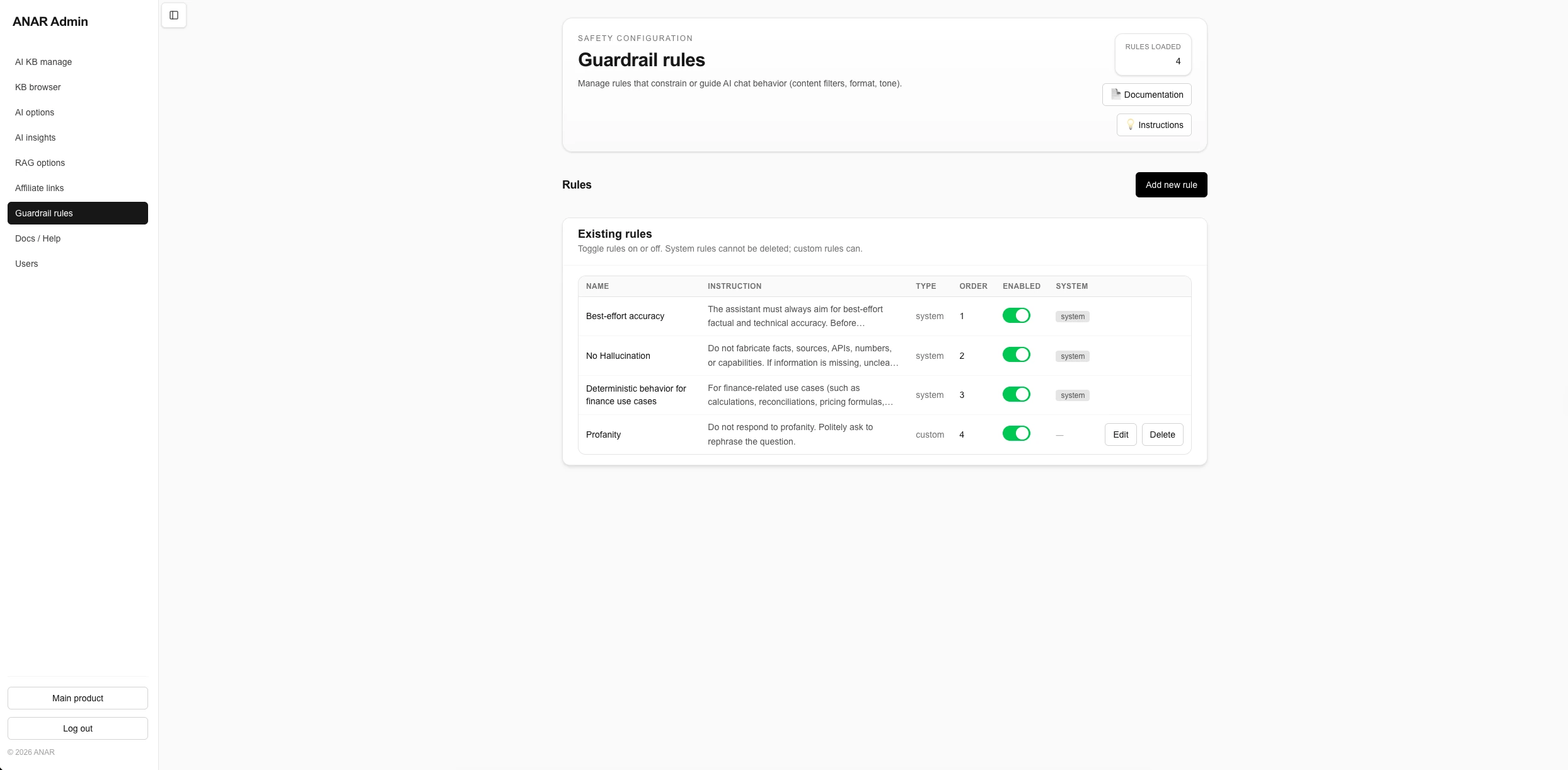
Operator admin panel
Internal management layer for platform operations, knowledge-base content, user-related workflows and onboarding configuration — content updates ship without engineering involvement.
Billing + onboarding
Production-ready flows supporting user acquisition, account setup and monetisation — wired into RLS and quota enforcement so plan changes propagate instantly across the product.
Decisions, not just dependencies.
The frontend is built with Next.js 15 App Router, React 19 and TanStack Query v5 for client-side fetching, caching and optimistic UI. The API layer uses Next.js Route Handlers split across runtimes — Node.js for the chat pipeline (longer-running tool-rich requests) and Edge for fast knowledge-base retrieval close to the user.
Supabase Postgres is the core database with Row-Level Security across user-owned data and 25+ tables backing product logic. The pgvector extension enables cosine-similarity vector search for the RAG pipeline — every chat turn retrieves the most semantically relevant chunks from the financial knowledge base, then GPT-4o composes a personalised answer grounded in those passages and the user's stored context.
What was hard, and how we shipped it.
- 01
RAG pipeline grounded in cross-border finance
pgvector cosine-similarity retrieval over a structured financial knowledge base feeds GPT-4o on every turn — so answers about NRE/NRO accounts, FEMA, tax treaties or mutual funds are anchored to retrievable source material rather than model recall.
- 02
Hybrid runtime for AI performance
Chat pipeline runs on Node.js where longer tool-rich requests need it; knowledge-base retrieval runs on Edge runtime close to the user. The split keeps retrieval latency low without forcing every endpoint into the same constraints.
- 03
Personalised context, not generic answers
Each user's residency status, account types, and investment goals are stored in Supabase under RLS and woven into both retrieval and prompting — so the same question from two users surfaces meaningfully different guidance.
- 04
Task tracker bridging advice to execution
AI recommendations are converted into structured action items that persist in the product — turning conversational guidance into a concrete plan the user can work through over weeks and months.
- 05
Production-grade stack from day one
Onboarding, billing, admin tooling, RLS-protected data access and 25+ tables of product logic — the platform shipped with the infrastructure needed for real users and real revenue, not a demo wrapped around an LLM call.
Looking at a project that sits at this kind of seam?
Bring us the architecture, the constraints, and the ship date. We will bring the rest.
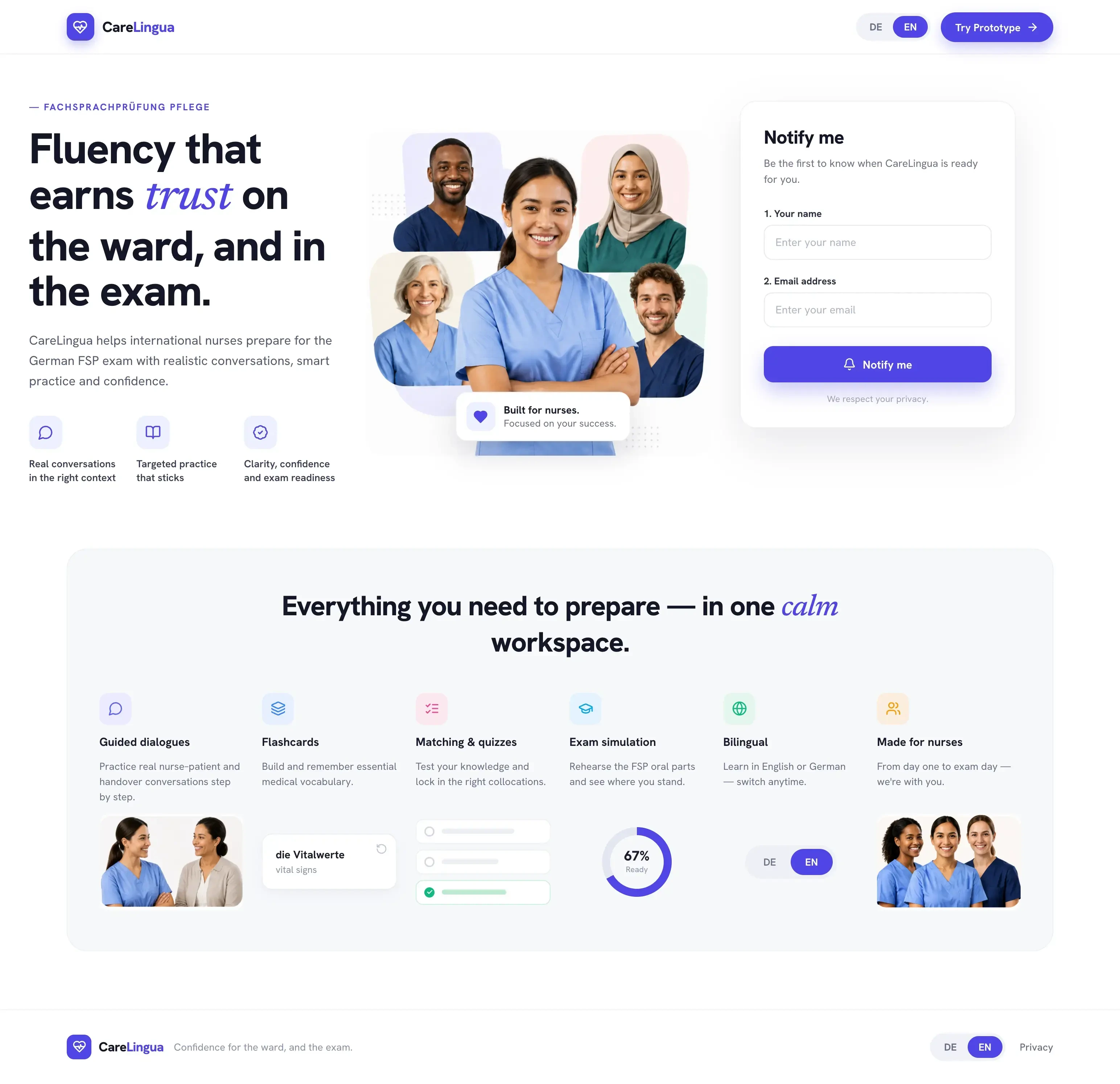
CareLingua
Bilingual FSP exam-prep platform for nursesCareLingua turns preparation for the Fachsprachprüfung Pflege — the language exam internationally-trained nurses need to get licensed in Germany — into a structured, bilingual training platform, built on a content platform that cannot silently break.
ClubPulse
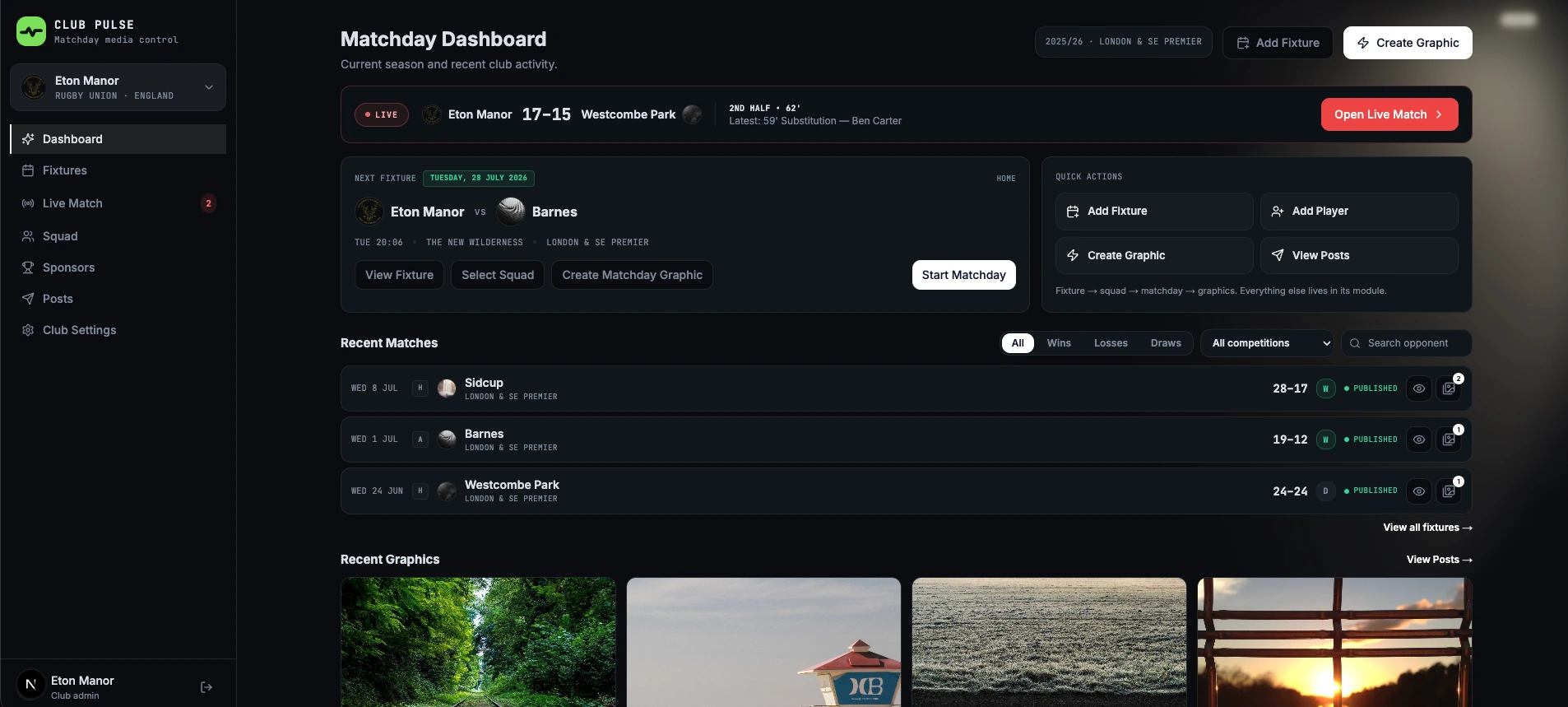
Matchday media control for amateur rugby clubsClubPulse is a matchday media control platform for amateur rugby union clubs. Secretaries manage fixtures and squads, run a live scoring console, generate branded Instagram graphics from 37 templates, and publish to Instagram, Facebook, and X — all in one app. Crest and player-photo cleanup runs in the browser with ESRGAN and BiRefNet, identity-preserving and never generative.