Meridian Billing Partners // Healthcare billing
An agentic AI for automating prior authorization in medical billing
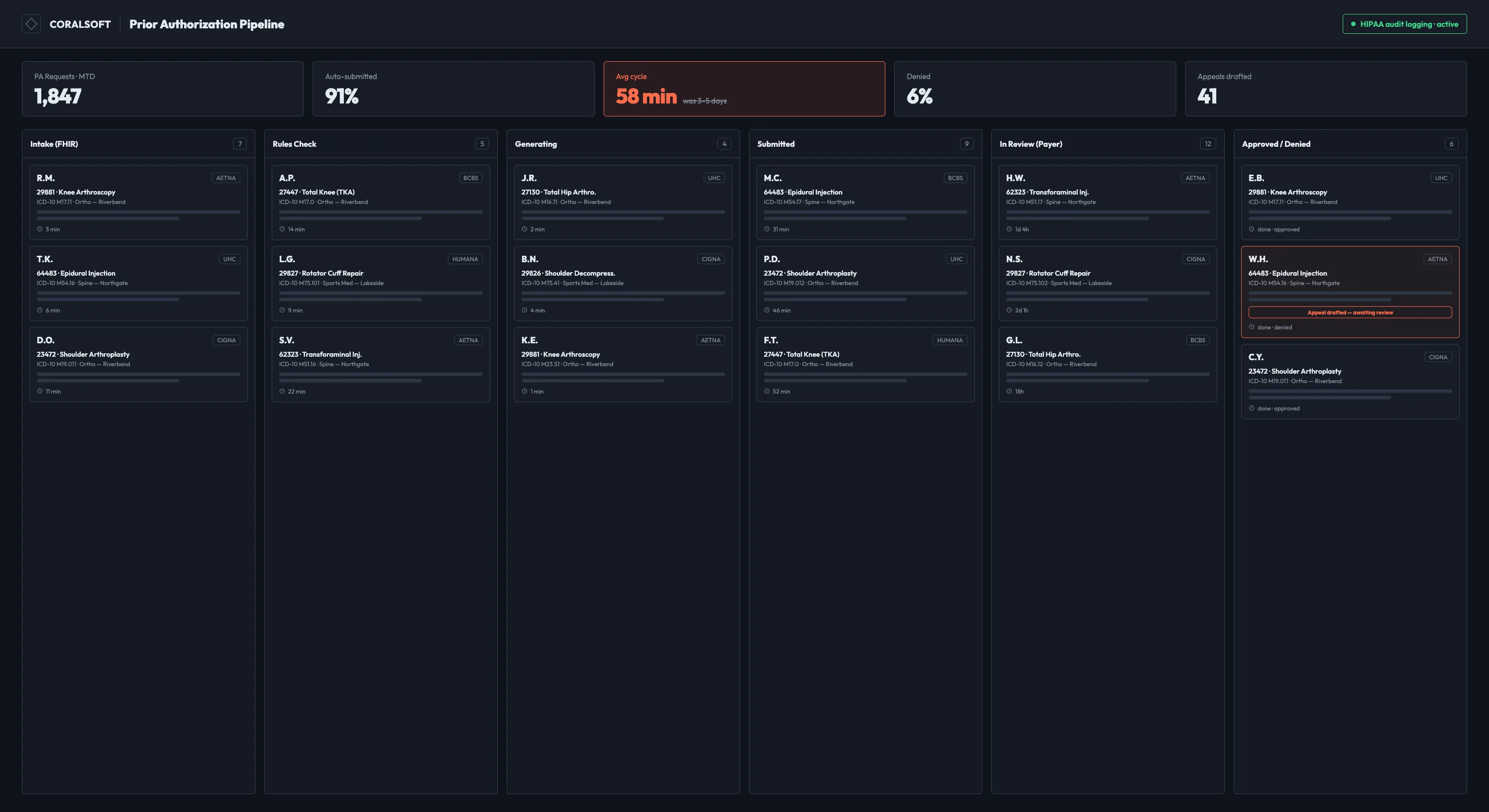
The client processes roughly 1,900 prior authorization (PA) requests per month — a mandatory step where a clinic must obtain a payer's approval before performing a procedure, or the claim gets denied. A team of 11 billing specialists manually pulled patient data and procedure codes (CPT/ICD-10) from the EHR, figured out which forms a given payer required (each with its own portal and rules), filled them out, tracked status, and drafted appeals when requests were denied.
The average PA cycle took 3–5 business days, and 18% of requests stalled due to simple form errors or lack of tracking — the clinic often found out about a denial only after the procedure had already taken place.
The product surface
A production-grade agentic system that runs the full prior authorization cycle without human involvement in the typical case.
EHR data pull
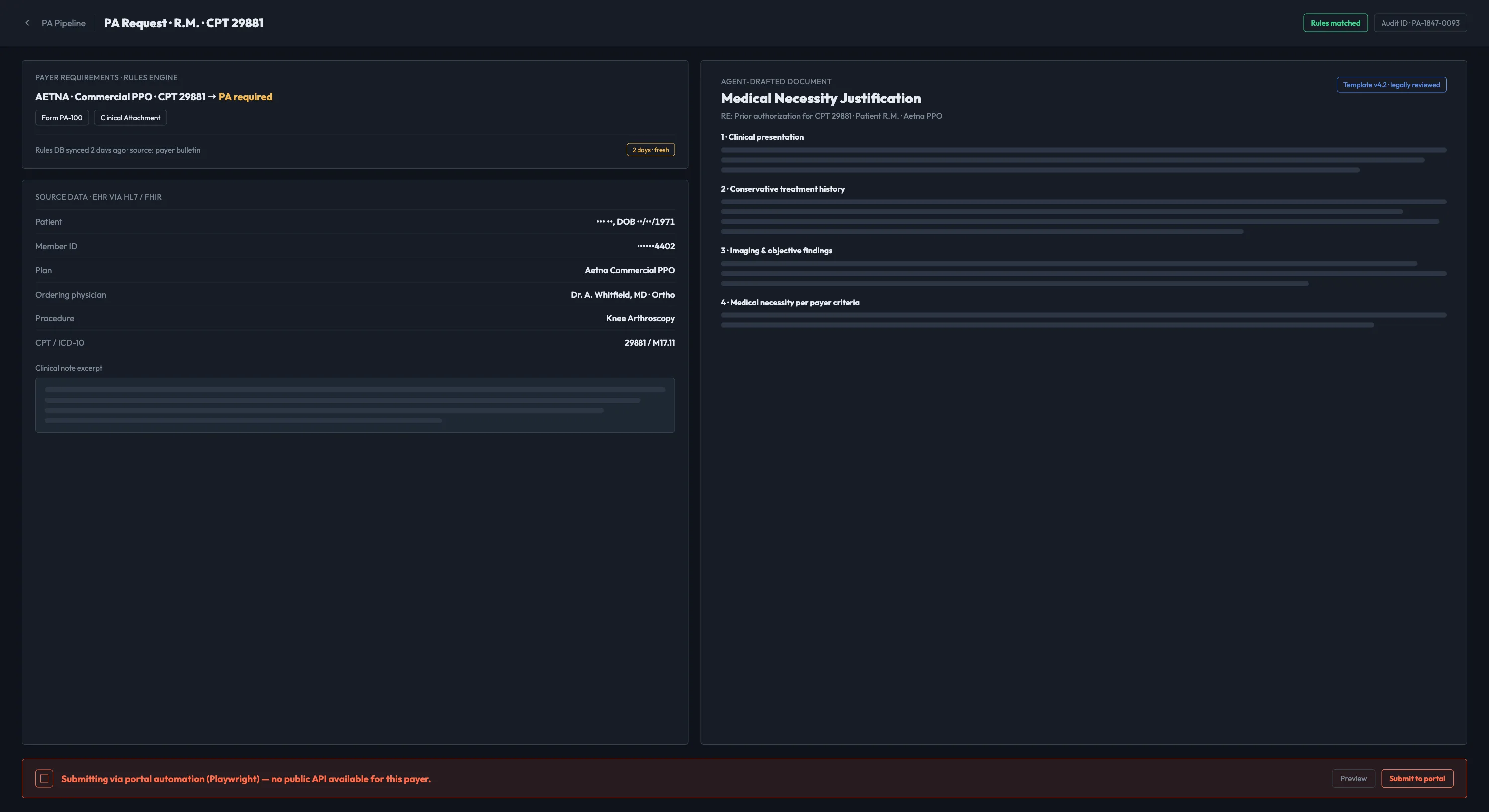
Pulls data from the EHR (HL7/FHIR interface): patient demographics, insurance plan, the procedure ordered, CPT/ICD-10 codes, and the physician's clinical notes.
Payer requirement engine
Checks a rules database (updated weekly from payer bulletins) to decide whether PA is required and which forms and supporting documents are mandatory for that specific plan and procedure.
Request generation & submission
Fills out the payer-portal form via browser automation (where no API exists), attaching a medical-necessity justification the agent drafts from the physician's notes using a legally reviewed template.
Status tracking
Periodically checks the portal/email notifications, updates the clinic's internal system, and notifies the billing team of the outcome.
Appeal drafting
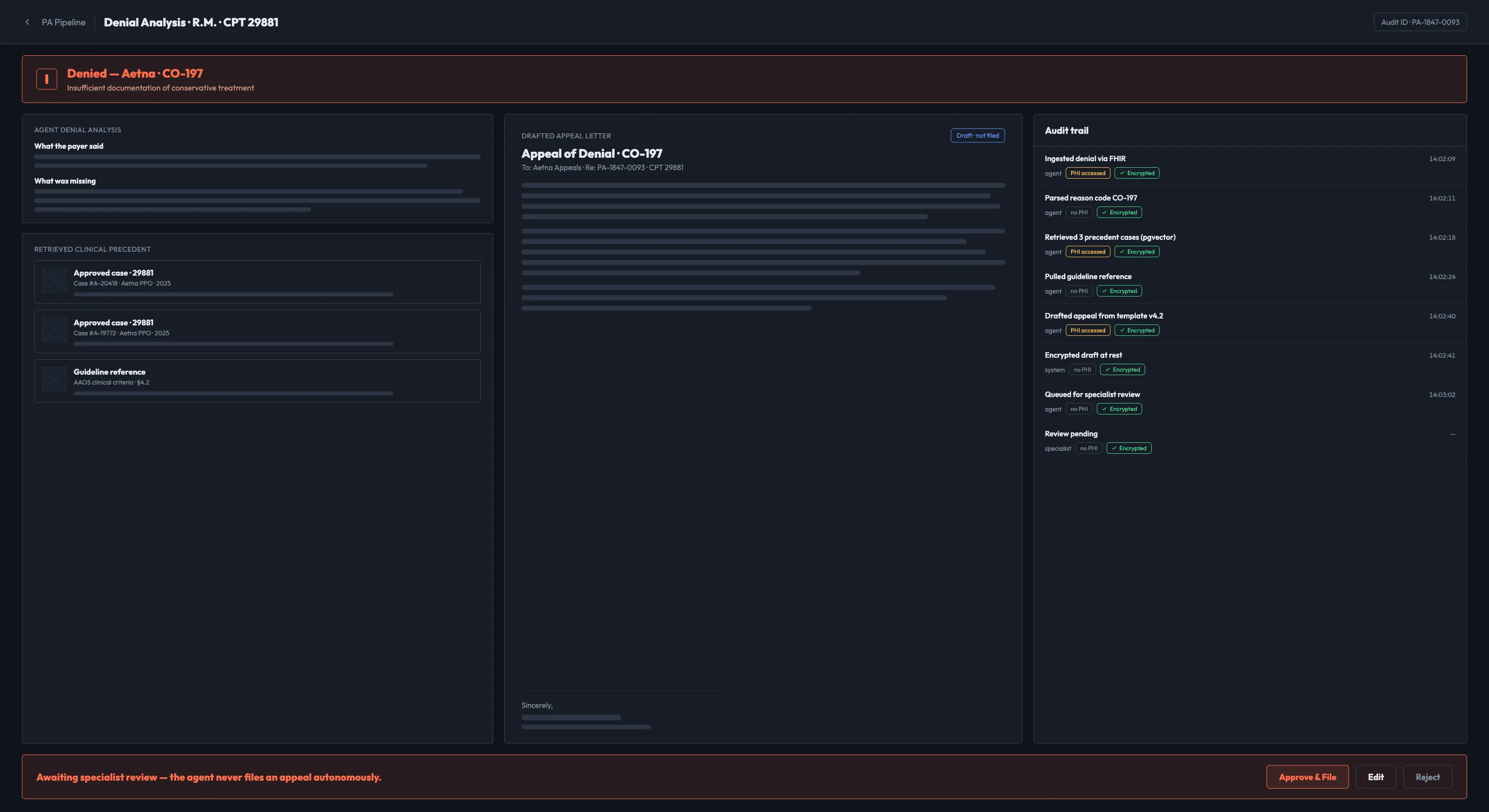
On denial, analyzes the denial reason, pulls a relevant clinical precedent, and automatically drafts an appeal letter for human review — the final decision to file an appeal always stays with a specialist.
Decisions, not just dependencies.
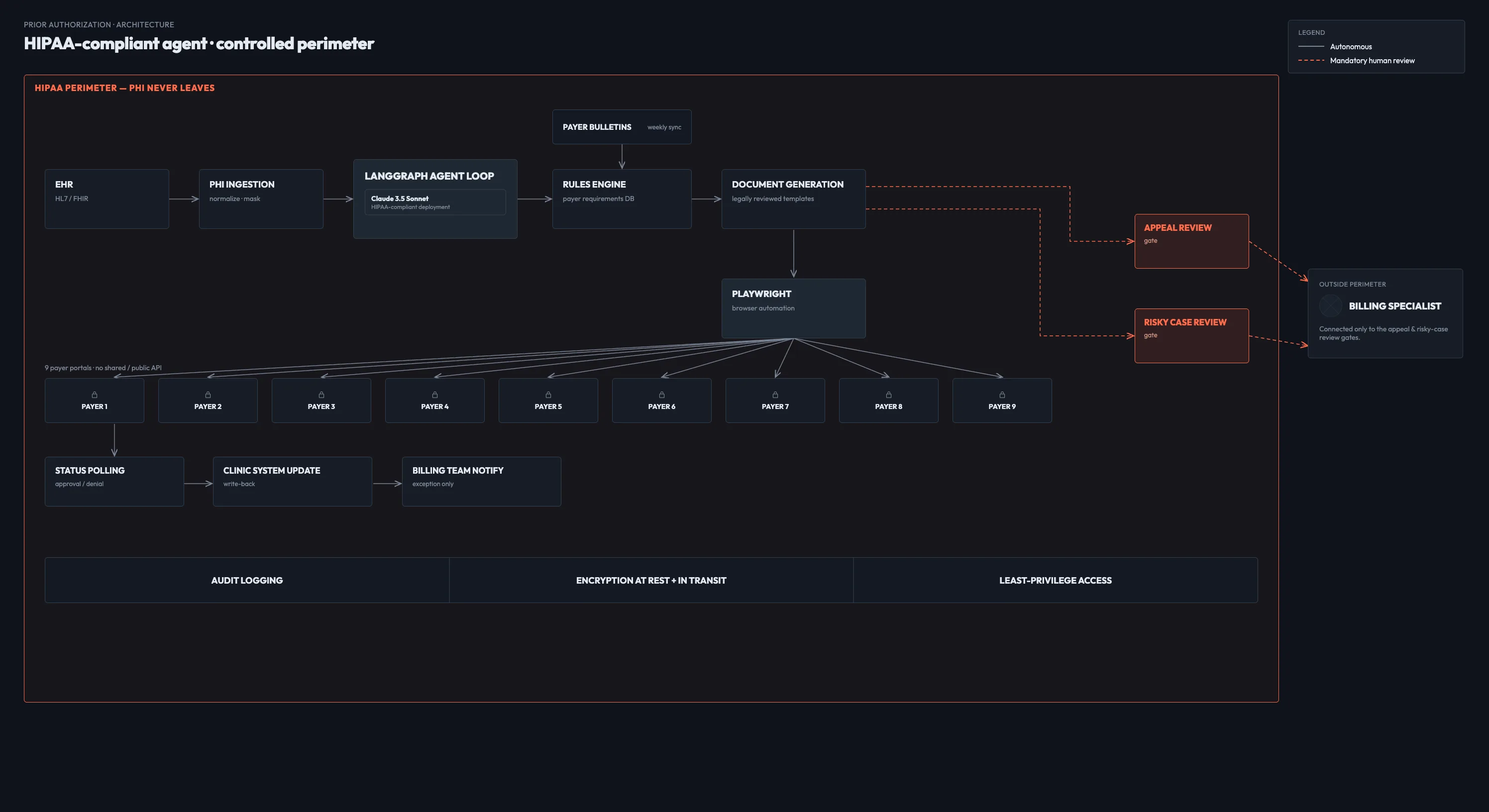
A planner-executor agent (LangGraph) runs a separate state machine per PA request in an “execute → human review on risky steps” mode. Claude 3.5 Sonnet — deployed HIPAA-compliant, with a BAA in place with the provider — interprets clinical notes and drafts medical-necessity justifications and appeals. A FHIR connector reaches the EHR, a browser-automation layer (Playwright) drives payer portals without an API, and a document-generation step produces the PDF forms, with email/portal polling for status updates.
A separate, non-LLM rules engine holds the payer rules — which procedures require PA, which documents are mandatory — updated weekly by the compliance team, with the LLM only interpreting context within those rules. PHI is encrypted at rest and in transit, access is role-based, every agent action is captured in a full audit trail, the system runs inside an isolated VPC perimeter, and BAAs are in place with all infrastructure subprocessors. An observability dashboard tracks the share of autonomous submissions, average cycle time, denial rate and reasons, and SLA per payer.
What was hard, and how we shipped it.
- 01
Nine payers, nine portals, zero shared API
Most payer portals have no public API, so interaction happens through web-based forms — the agent submits across nine payer portals via browser automation.
- 02
Built for a HIPAA auditor
PHI encrypted at rest and in transit, role-based access, a full audit trail of every agent action, an isolated VPC perimeter, and BAAs in place with all infrastructure subprocessors.
- 03
Rules engine the LLM can't overrule
A separate, non-LLM database of payer rules — updated weekly by the compliance team — decides what's required; the LLM only interprets context within those rules, so a stale rule is flagged rather than hardcoded.
- 04
Legally reviewed document templates
Medical-necessity justifications and appeal letters are drafted from physician notes using legally reviewed templates, with the final appeal decision left to a specialist.
- 05
Freed for the hard cases
84% of PA requests are submitted fully autonomously and denials from form-filling errors fell 41%, redirecting the billing team toward complex appeals and payer negotiations.
Looking at a project that sits at this kind of seam?
Bring us the architecture, the constraints, and the ship date. We will bring the rest.
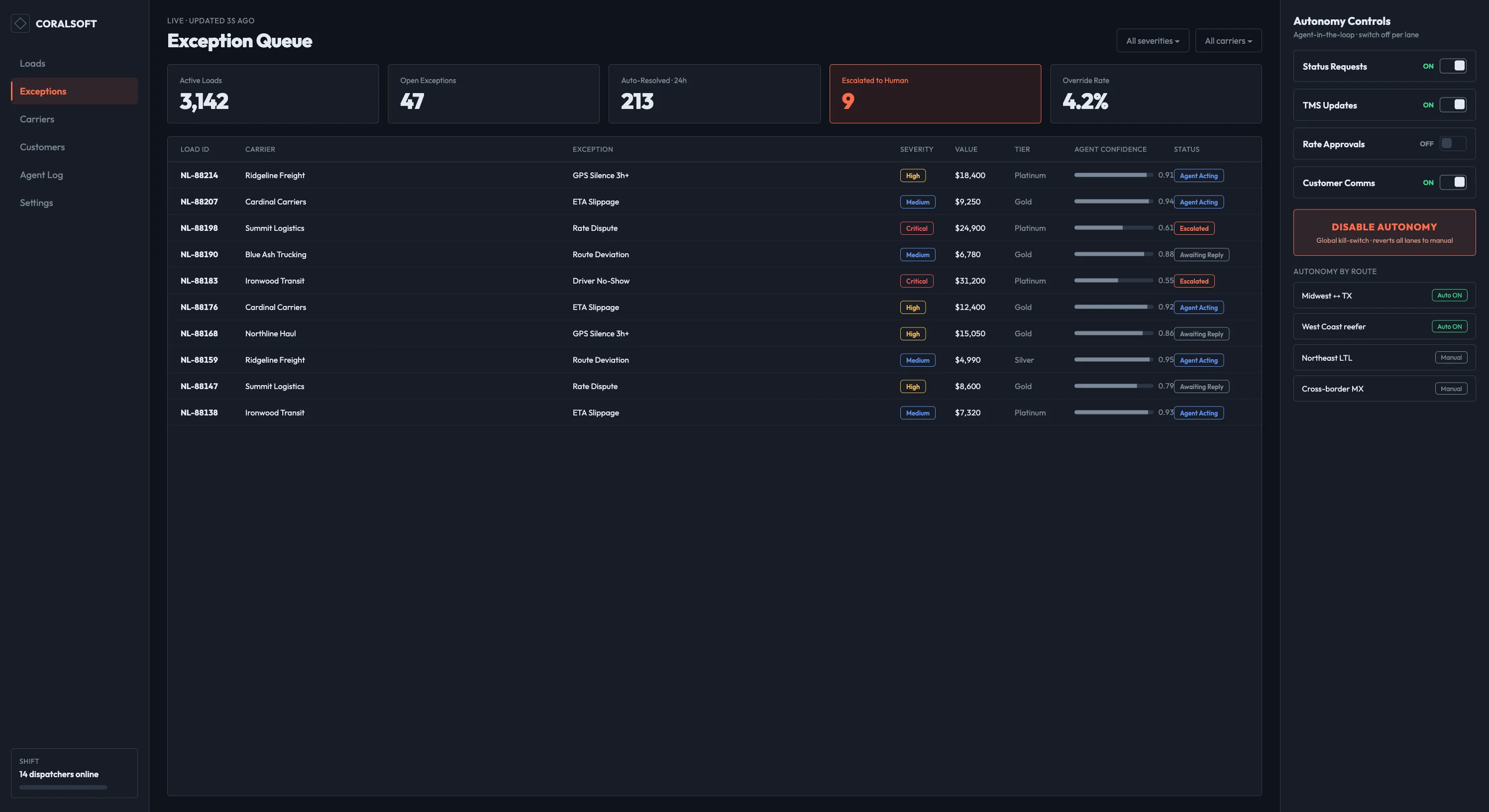
NorthLane Freight
Logistics & supply chainAn autonomous AI agent — not a chatbot, but an agent that takes real actions in external systems — built for a mid-sized US freight brokerage to resolve dispatch exceptions across the TMS, ELD, email, SMS, and carrier portals.
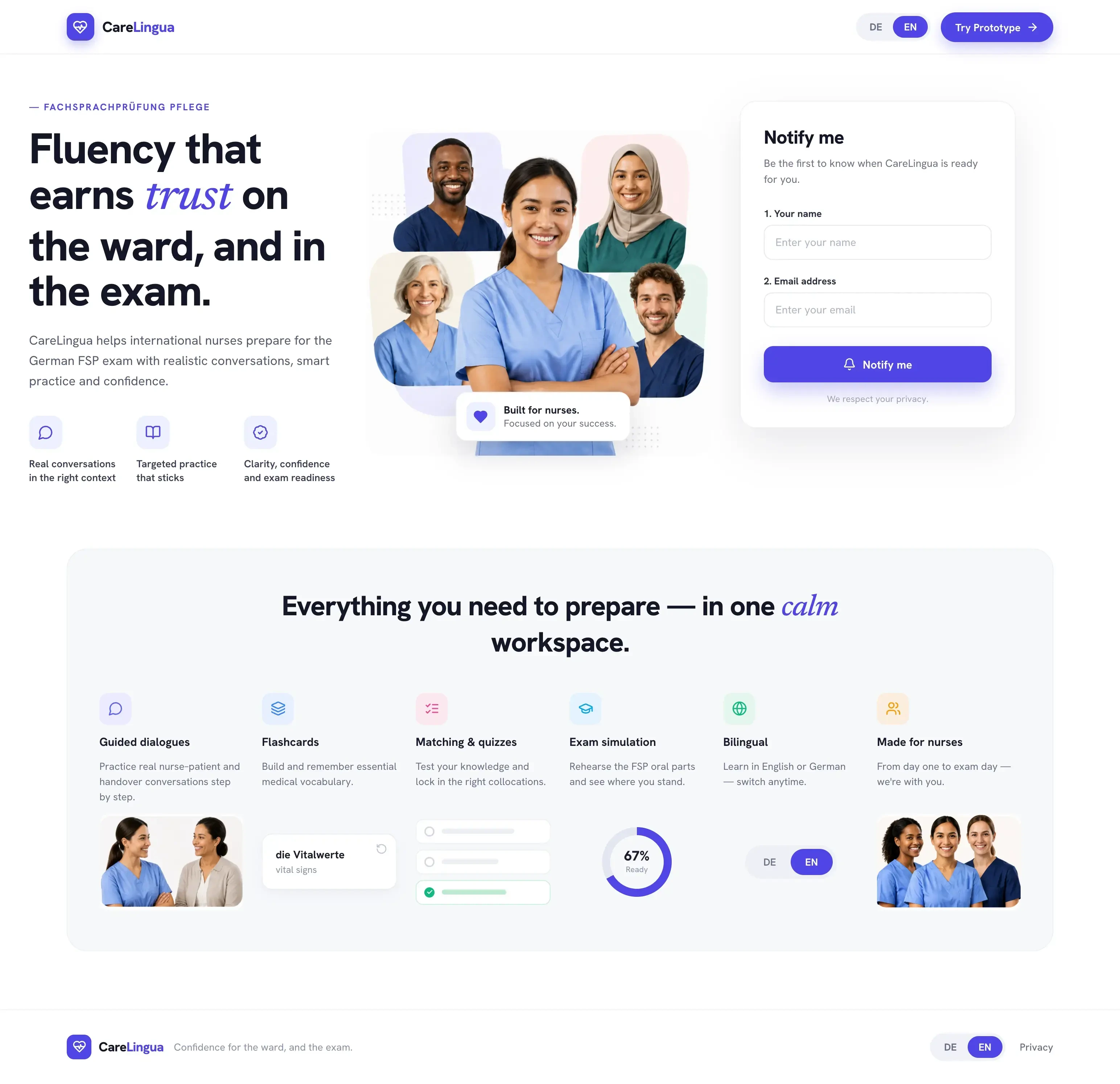
CareLingua
Bilingual FSP exam-prep platform for nursesCareLingua turns preparation for the Fachsprachprüfung Pflege — the language exam internationally-trained nurses need to get licensed in Germany — into a structured, bilingual training platform, built on a content platform that cannot silently break.