01
scoping · requirementssprint 01
SaaS Development Services for Scalable Digital Products
We design, build, and scale cloud-native SaaS platforms tailored to your business model — from zero-to-one MVP builds to architecture overhauls for scaling products.
30+
industries served
12
years of SaaS
delivery experience
delivery experience
1M+
users on platforms
we have scaled
we have scaled
01 · Definition
What Are SaaS Development Services
End-to-end capability stack
// scope of work
SaaS (Software as a Service) development services cover the end-to-end process of designing, building, launching, and scaling cloud-hosted software products that customers access via subscription — without installation, local infrastructure, or per-device licensing.
// what we cover
SaaS development services encompass product strategy, architecture design, full-stack engineering, DevOps infrastructure, and ongoing scaling — the full capability stack required to build a commercially viable SaaS business, not just software that runs in the cloud.
02 · Methodology
Our SaaS Development Approach
We treat SaaS products as business systems, not just codebases. Every architecture decision has a commercial implication — and we surface those trade-offs explicitly at each stage.
Phase 01
2 weeks
// stage 01 — discovery and strategy
Map the business before any code is written.
We begin with a structured discovery sprint covering ICP definition, competitive positioning, feature prioritisation, integration mapping, and go-to-market assumptions. Output: a product roadmap — before any engineering begins.
Output → Product roadmap03 · Lifecycle
SaaS Development Lifecycle Explained
// six stages, one continuum
02
Discovery Sprint
03
MVP Development
04
Launch
05
Scaling
06
Optimisation
04 · Product types
Types of SaaS Solutions We Build
Coralsoft engineers are proficient in devising, building, and maintaining a wide range of SaaS solutions across various walks of business.
B2B SaaS Platforms
01 / 04Workflow tools, vertical SaaS, and productivity platforms sold to businesses on subscription. Architecture optimized for team-based multi-tenancy, enterprise SSO (SAML/OIDC), role hierarchies, and usage-based billing.
EXAMPLESproject management tools · analytics platforms · CRM systems · compliance software
Marketplaces
02 / 04Two-sided or multi-sided platforms connecting supply and demand — with SaaS-style infrastructure supporting payments, reviews, matching algorithms, and seller/buyer tooling. Revenue models include take-rate, SaaS subscription, or hybrid. Architecture requires careful separation of marketplace logic from transactional flows.
REVENUEtake-rate · subscription · hybrid
AI-Powered SaaS
03 / 04Products with AI as a core feature — not a bolt-on. We architect AI-native SaaS with LLM integration (OpenAI, Anthropic, open-source), prompt management systems, usage metering for AI cost allocation, and fallback logic. Designed to remain commercially viable as model costs evolve.
STACKOpenAI · Anthropic · open-source LLMs
Vertical SaaS
04 / 04Industry-specific SaaS products built for a defined niche — legal, healthcare, construction, education, logistics. Vertical SaaS commands higher ARPU and lower churn than horizontal tools. Architecture must accommodate domain-specific compliance, data models, and workflow patterns from day one.
VERTICALSlegal · healthcare · construction · education · logistics
05 · Architecture
SaaS Architecture and Technology Stack
Architecture choices made at the outset determine your product's scalability ceiling, compliance posture, and total cost of ownership over a three-to-five year horizon. We make these decisions deliberately — and document the trade-offs transparently.
01 / 03
Multi-Tenant Architecture
Most SaaS products use a shared-database, shared-schema multi-tenancy model — all tenant data in a single database, isolated by tenant ID. This minimises infrastructure cost but requires careful query isolation and index design. Schema-per-tenant offers stronger isolation and is preferred for regulated industries (healthcare, fintech) where data separation is a contractual or compliance requirement.
02 / 03
Microservices vs Monolith
We recommend starting with a modular monolith for MVPs and early-stage products. Microservices add operational overhead that is rarely justified until you have multiple independent teams, or specific services that need independent scaling. We design modular monoliths with clean service boundaries — making future decomposition straightforward when scale demands it.
03 / 03
Cloud Infrastructure
We deploy on AWS (primary), GCP, or Azure based on your existing tooling, compliance requirements, and team preference. Cloud-agnostic Terraform modules ensure portability. Reference: Amazon Web Services (aws.amazon.com) and Microsoft Azure (azure.microsoft.com) provide detailed SaaS architecture guidance relevant to infrastructure selection.
Technology Stack Reference
Below follows an example of how a solid SaaS solution tech stack can be built.
Reference SaaS Stack
/ 9 layers| Layer | Primary Stack | Alternatives |
|---|---|---|
| Frontend | React, Next.js | Vue.js, Nuxt, Svelte |
| Backend API | Node.js (TypeScript) | Python (FastAPI), Go, Ruby |
| Database | PostgreSQL | MySQL, MongoDB (document) |
| Cache | Redis | Memcached |
| Queue | SQS / BullMQ | RabbitMQ, Kafka |
| Auth | Auth0, custom JWT | Clerk, Supabase Auth |
| Billing | Stripe | Chargebee, Paddle |
| Infrastructure | AWS + Terraform + EKS | GCP, Azure, Railway |
| Monitoring | Datadog, Sentry | New Relic, Grafana |
SaaS Development vs Traditional Software
The decision to build a SaaS product vs traditional software carries significant architectural, commercial, and operational implications. This comparison reflects real trade-offs — not a sales argument.
SaaS vs Traditional — 8 dimensions
/ side-by-side| Dimension | SaaS | Traditional Software |
|---|---|---|
| Deployment | Cloud-hosted, vendor-managed | On-premise or client-managed |
| Revenue Model | Recurring subscription (MRR/ARR) | One-time licence or perpetual |
| Scalability | Horizontal, elastic infrastructure | Limited by client hardware |
| Updates | Continuous delivery, instant rollout | Version releases, manual upgrades |
| Maintenance | Vendor responsibility | Client or vendor SLA |
| Data Control | Vendor-hosted (with contractual controls) | Full client control |
| Time to First Value | Instant (browser/API access) | Days to weeks (installation) |
| Unit Economics | Scales favourably with users | Linear cost per deployment |
06 · Why Coralsoft
Why Choose Us for SaaS Development
Building your SaaS platform with Coralsoft, you opt for reliability and predictable outcomes from the onset.
Product Thinking, Not Just Engineering
We engage with your business model, not just your feature list. We challenge scope, identify assumptions worth testing before building, and maintain a product lens across every engineering decision — the discipline that separates SaaS products that scale from those that stall.
Scalability-First Architecture
Every SaaS platform we build is designed to scale before it needs to. We implement multi-tenancy correctly from day one, separate read and write workloads, and build observability into the system — so your engineering team inherits a codebase they can grow, not one they need to rescue.
Fast MVP Delivery
We have an established delivery system for SaaS MVPs: a two-week discovery sprint, a detailed scope document, and an agile build cadence with bi-weekly demos. Most MVPs ship in 4–10 weeks. We do not gold-plate; we build what validates the value proposition and nothing more.
SaaS Metrics Expertise
We understand LTV, CAC, NDR, and churn — and build instrumentation to track them from launch. Your analytics stack is designed to surface the signals that matter for SaaS growth, not just uptime and error rates.
07 · Selected work
Case Studies
Two production SaaS platforms shipped by Coralsoft — a B2B community intelligence platform with hybrid AI search, and a digital business card PWA built zero-to-production.
Coralsoft TRESAI-powered community intelligence for brand partnerships
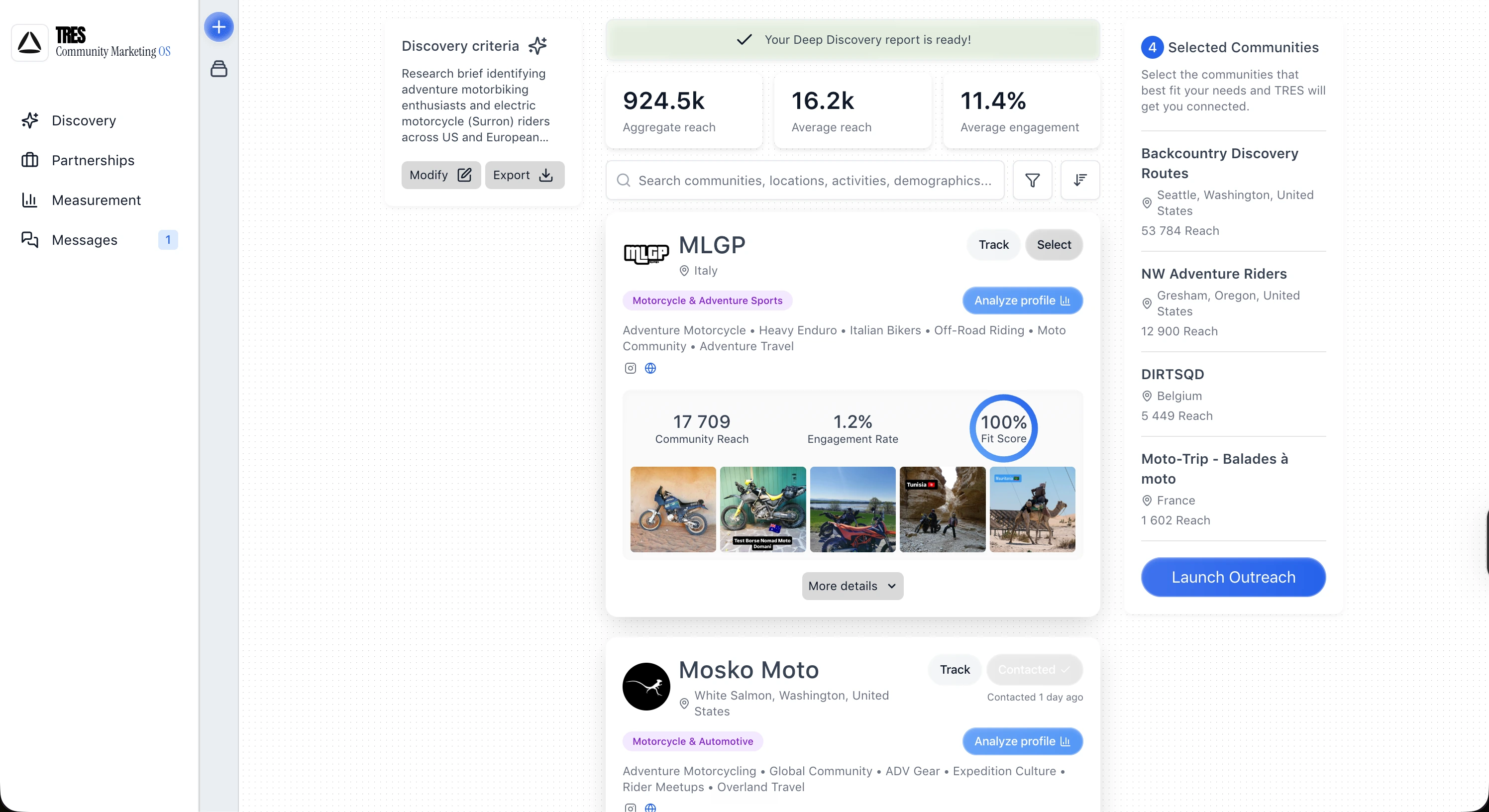
TRES
jointres.coA B2B SaaS platform connecting brands with communities — built end-to-end as a monorepo with a real-time Convex backend, a hybrid AI search engine across 85,000 communities, Stripe partnership payments, and a Shopify affiliate app.
85K
Enriched research communities in the production corpus
28×
Corpus growth during the Coralsoft engagement
6
Distinct product surfaces sharing one typed backend
Convex backendTypesense + LLM rankingAnthropic ClaudeStripe ConnectShopify embedded appMonorepo
Read the case studyCoralsoft Holloway StudiosA multi-tenant SaaS platform for a boutique fitness studio chain
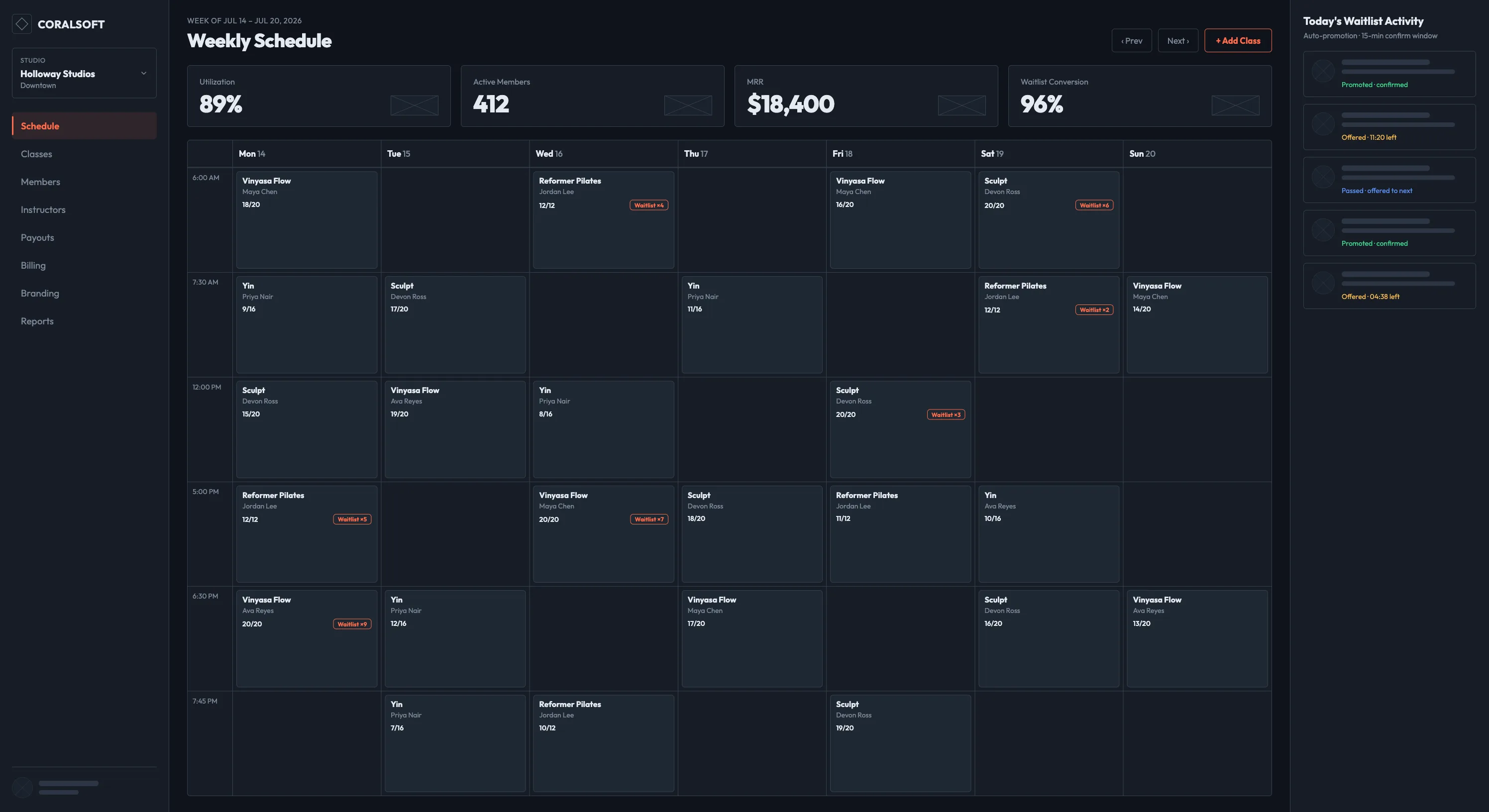
Holloway Studios
Fitness & wellness SaaSA full-stack, multi-tenant SaaS platform, built from scratch for the operator of a boutique yoga and pilates studio chain that decided to turn an internal management tool into a product sold to other studios.
14
studios on the platform by the end of beta
22% → 4%
share of classes running under capacity despite a full waitlist
9 hrs/week
saved per studio on manual instructor-payout calculations
Next.js 15Supabase RLSStripe BillingStripe ConnectTwilioVercel
Read the case studyCoralsoft HAIZELA digital business card built to replace the paper one — and LinkedIn
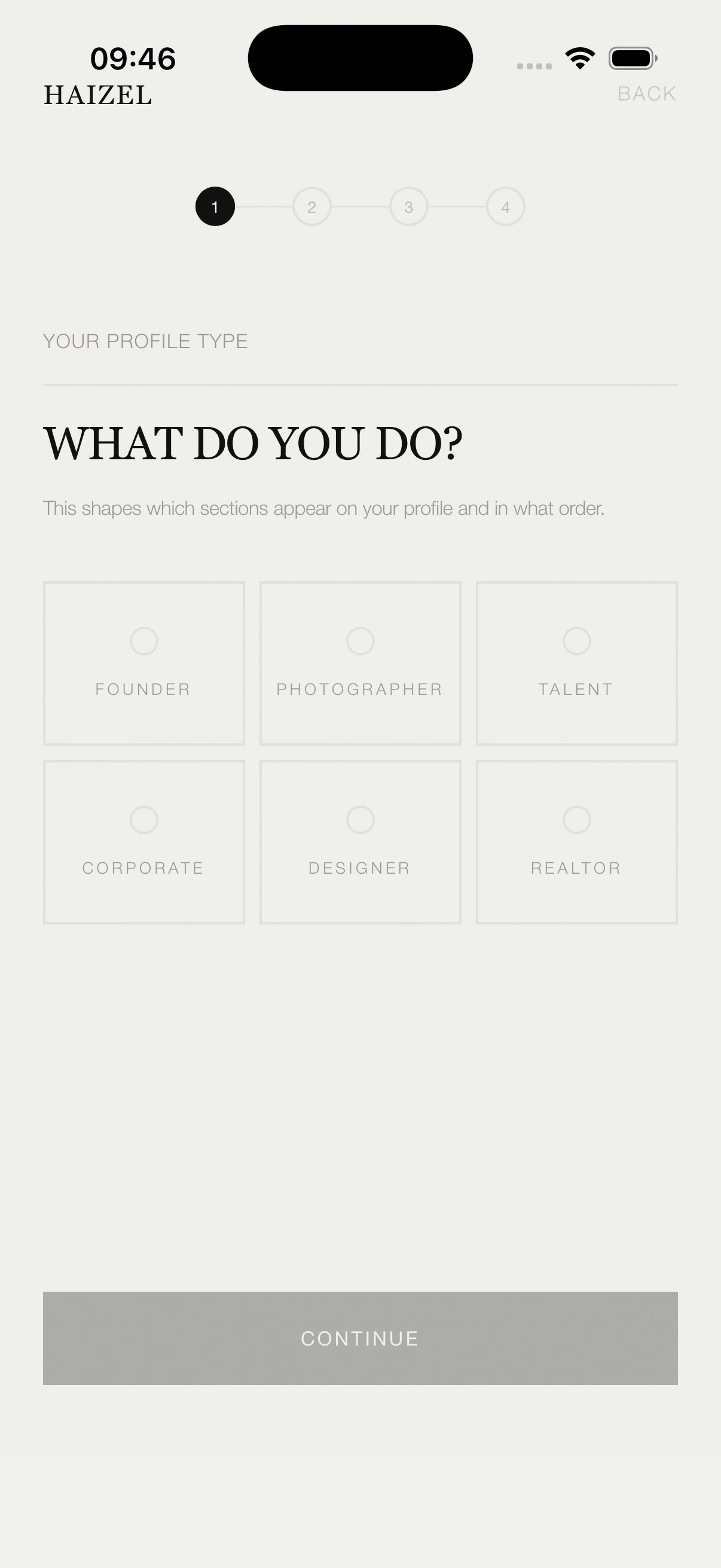
HAIZEL
Blkbook · professional networking PWAA mobile-first progressive web app that replaces the paper business card with a fully customisable digital identity — built from zero to production by Coralsoft.
15
Typed profile component types — Hero, Portfolio, Timeline, Press, Quote…
6+
Role-based default stacks so users never start from blank
0→1
Full-stack greenfield build, zero codebase to production launch
Next.js 16SupabaseGoogle Gemini AIApple WalletPWAInvite-only SaaS
Read the case study08 · Engagement
Engagement Models
We structure engagements to match your stage, risk tolerance, and internal technical capability.
Dedicated Team
01A senior engineer, SaaS product specialist, and delivery lead embedded in your product cycle. Ideal for funded startups and scale-ups building core product infrastructure.
// embedded teamMost popular
Fixed Price
02Defined scope, fixed cost, committed timeline. We carry the delivery risk. Best suited to well-scoped MVP builds where budget approval requires certainty.
// scoped deliveryRisk on us
Time & Materials
03Pay for hours consumed. Maximum flexibility for evolving requirements, exploratory architecture work, or augmenting an existing internal team.
// flexibleHourly
09 · FAQs
Frequently asked questions
Honest answers to the questions our prospective clients ask most. Still curious? Reach out below.
10 · Ready when you are
Your Business Driver, Delivered Fast
Tell us your use case. We will map the right architecture, identify integration dependencies, and give you a realistic cost estimate — in one 30-minute call. No obligation.
- 30-minute discovery call
- Architecture & integration map
- Realistic cost estimate