
This guide works through what actually distinguishes an AI agent from traditional workflow automation, how agents are built and how they reason through a task, where they're delivering real value in production today, and what to watch for before putting one in charge of something that matters.
What Makes Something an AI Agent, Rather Than Just Automation
Traditional workflow automation — the kind tools like Zapier and Make have offered for years — follows a fixed path: when X happens, do Y, then Z, in that order, every time. The logic is defined entirely in advance by whoever built the workflow. This is reliable and auditable precisely because it never deviates, but it also means the workflow breaks or produces a wrong result the moment it encounters a situation its builder didn't anticipate.
An AI agent is built around a language model that reasons about a task at each step rather than following a fixed script, deciding what to do next based on what it observes, and adjusting its approach when the situation doesn't match what was expected. Given a goal — "resolve this support ticket," "reconcile these two spreadsheets," "qualify this inbound lead" — an agent can look at the available information, decide which tool or action makes sense next, act on that decision, observe the result, and repeat until the goal is met or it determines it needs human input. That loop, not any single capability, is what separates an agent from a workflow: a workflow executes a predetermined sequence of steps, while an agent decides the sequence as it goes.
It's worth being precise about this distinction because a lot of what's marketed as "agentic" today is closer to a workflow with an AI-generated step bolted onto one part of it — using a language model to draft a reply, summarize a document, or classify an input, inside an otherwise fixed sequence. That's a legitimate and often very useful pattern, but it isn't the same thing as an agent that's actually making judgment calls about what to do next, and conflating the two leads to disappointed expectations when a "workflow with an AI step" is asked to handle situations that require genuine judgment.
How AI Agents Actually Work
Underneath the marketing language, most production AI agents are built from a fairly consistent set of components, regardless of which platform assembles them.
The reasoning loop
At the core of every agent is a loop, often described using the "ReAct" pattern (reasoning and acting), where the model alternates between thinking about what to do next and actually doing it. Given a task and the current state of the world — the conversation so far, the results of any actions already taken — the model generates a thought about what step would move the task forward, takes that step by calling a tool or producing output, observes what happened, and folds that observation back into its next round of reasoning. This continues until the model determines the task is complete, or until it hits a limit designed to prevent it from looping indefinitely without making progress.
Tools and actions
An agent's usefulness is bounded almost entirely by what it can actually do, not just what it can say. Tools are the functions an agent is allowed to call — searching a knowledge base, querying a database, sending an email, updating a CRM record, calling an internal API — each described to the model with enough detail about its purpose and required parameters that the model can decide when and how to use it. This is the same function-calling mechanism used in simpler single-turn AI integrations, but in an agent it's exercised repeatedly and chained together, with the output of one tool call often informing the input to the next.
Memory and context
Because an agent's reasoning depends on everything it has observed so far, how that history is managed matters a great deal, especially for tasks that run over many steps or across a long time horizon. Short-term memory — the running record of the current task's steps and observations — needs to stay within the model's context window without losing information the agent still needs. Longer-running or recurring agents often add a separate memory layer, storing facts, past outcomes, or user preferences outside the immediate conversation so they can be retrieved later rather than resent in full on every single step.
Planning
For anything beyond a short task, many agent architectures separate planning from execution: a first pass breaks a goal down into a rough sequence of sub-tasks, and a second layer executes each sub-task, potentially revising the plan if an early step reveals something that changes what's actually needed. This tends to produce more reliable results on complex, multi-part goals than asking a single reasoning loop to hold the entire plan in its head while also executing each step, and it also gives a human reviewer a clearer point to inspect and approve before execution actually begins.
Multi-agent orchestration
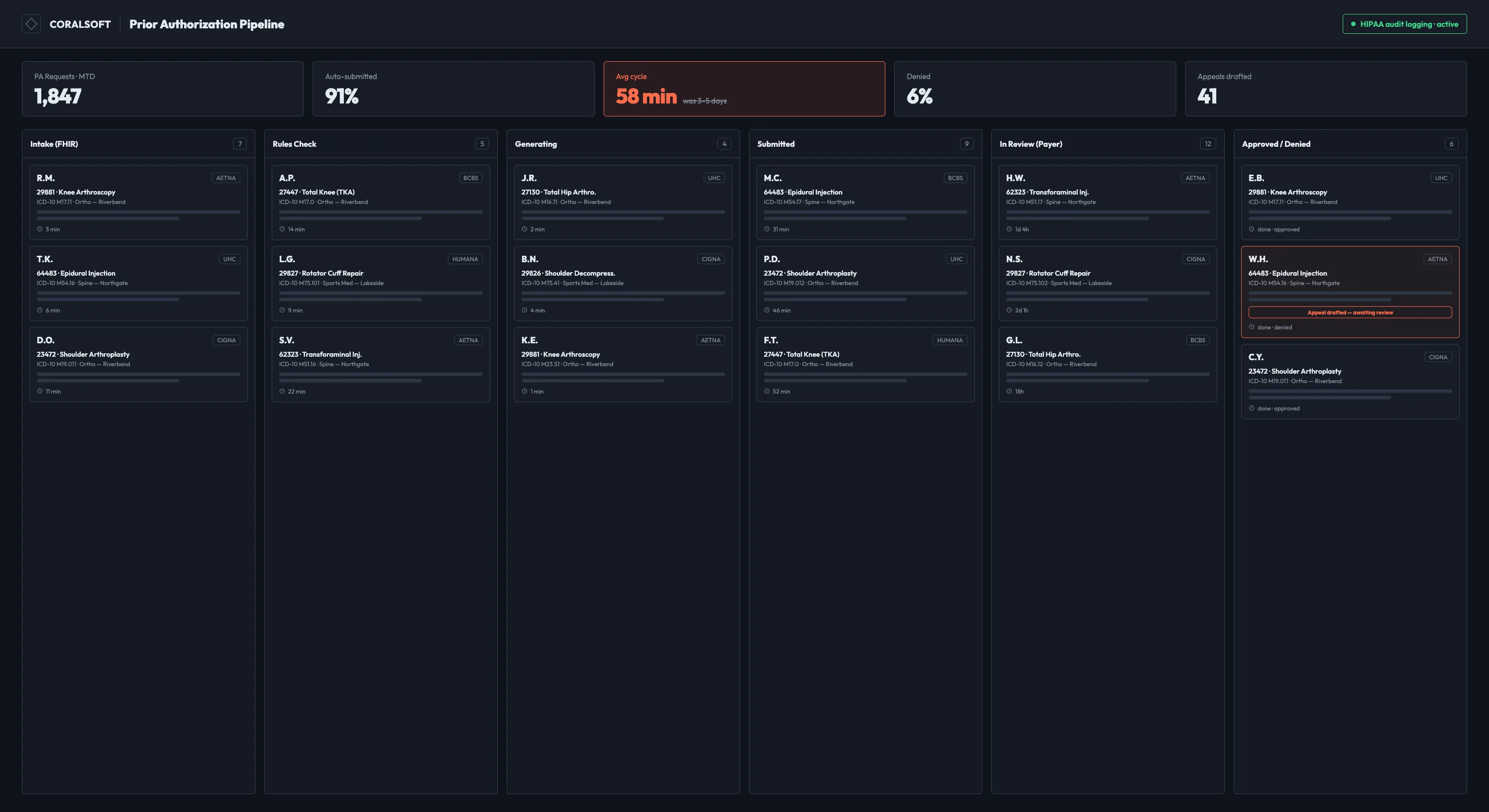
Some of the more capable systems in production today aren't a single agent but several, each with a narrower role, coordinated by an orchestrator that routes work between them. A customer support system, for instance, might have one agent handling initial triage and classification, a second retrieving relevant account and order data, and a third drafting the actual response — with the orchestrator deciding which agent handles which part of a given ticket and passing context between them. This division of labor tends to produce more reliable results than one generalist agent trying to do everything, largely because each narrower agent can be given a more focused set of tools and a more specific set of instructions, which reduces the chances of it reaching for the wrong tool or misinterpreting an ambiguous instruction.
Human-in-the-loop checkpoints
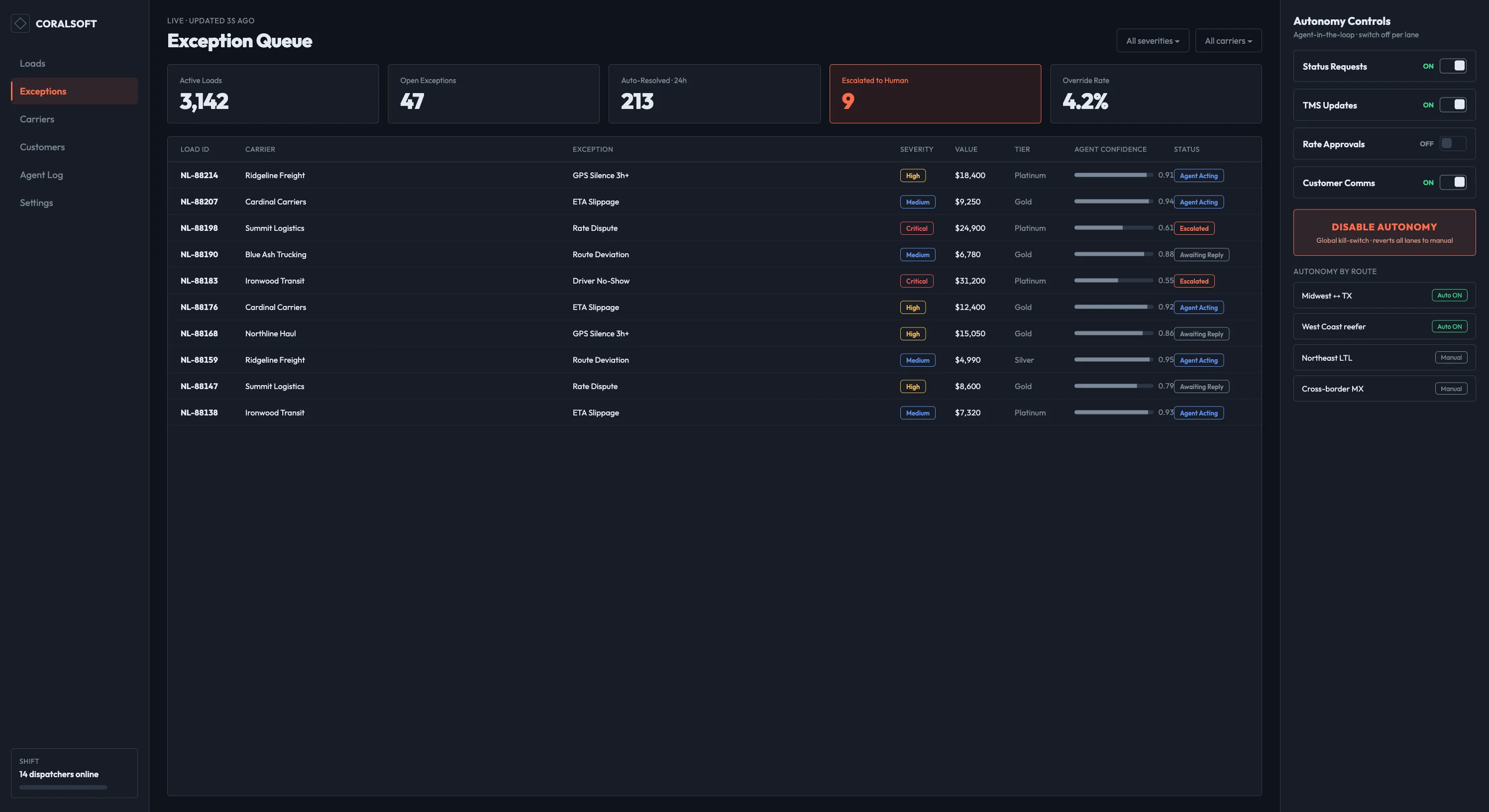
Very few production agent deployments run fully autonomously end to end, and the ones that don't have a checkpoint tend to be the ones that make the news for the wrong reasons. Most well-designed systems build in explicit points where the agent pauses for human approval before an irreversible or high-stakes action — issuing a refund, sending an external communication, modifying a production record — while letting lower-stakes, easily reversible steps proceed without a human in the loop. Where that line sits is one of the most important design decisions in any agentic system, and it's discussed further below.
Agents vs. Traditional Workflow Automation vs. RPA
It's worth being explicit about how agents relate to the automation approaches that came before them, since most organizations already have some of each and the boundary between categories is genuinely blurring as vendors add agentic features to existing workflow tools.
Robotic process automation, or RPA, automates repetitive tasks by scripting interactions with existing software interfaces — clicking buttons, copying data between fields, filling out forms — following a fixed script built around a specific version of a specific interface. It's reliable for stable, well-defined tasks but brittle to change: a UI redesign in the underlying application can break an RPA script that worked perfectly the day before.
Traditional workflow automation platforms — Zapier, Make, n8n, Power Automate — connect applications through APIs rather than screen-scraping, triggering a defined sequence of actions when a specified event occurs. This is more robust than RPA and easier to maintain, but it shares RPA's core limitation: the logic is fixed at build time, and any situation the builder didn't anticipate either fails or produces an incorrect result silently.
AI agents add a reasoning layer on top of this same tool-calling foundation, letting the system decide which action to take based on the specific situation rather than following a path someone predefined for every possible case. This is genuinely more capable for workflows involving ambiguity or exceptions — deciding whether a support ticket needs escalation, extracting the right information from an unstructured document, choosing which of several similar records actually matches a customer's request — but it's also less predictable and harder to fully test in advance, since the range of things an agent might decide to do is much larger than the fixed set of paths in a traditional workflow. For compliance-heavy processes where every step needs to be auditable and repeatable in exactly the same way every time, a governed traditional workflow is often still the right architecture; agents earn their complexity on tasks where the judgment they add is actually worth more than the predictability they cost.
Where AI Agents Are Delivering Real Value
The workflows where agentic automation has moved from pilot to production tend to share a few characteristics: high volume, a defined but not perfectly uniform structure, and enough ambiguity that a fixed rules-based workflow either breaks often or requires an unmanageable number of special-case branches.
IT operations is one of the clearest examples. Password resets, access requests, and recurring low-severity incidents follow a broadly similar pattern each time but vary enough in the details — which system, which user group, which specific error — that a rigid script handles only the simplest cases well. An agent that can look up a user's access history, check policy constraints, and either resolve a request directly or escalate it with the relevant context attached handles a meaningfully larger share of ticket volume without a human touching every case.
Customer support follows a similar shape: an agent that can retrieve a customer's order or account history, check it against policy, draft a response in the appropriate tone, and either send it or route it to a human reviewer depending on complexity and risk, is handling real ticket volume today in a way that a fixed decision tree struggled to.
HR workflows, particularly onboarding and routine employee questions, benefit from an agent's ability to pull together information scattered across several systems — benefits enrollment status, IT provisioning, policy documents — that a new employee would otherwise have to track down by asking several different people.
Finance and back-office operations — data reconciliation between systems that don't share a common format, invoice matching, flagging discrepancies for review — are a common and lower-risk starting point precisely because the agent's output can be checked against a source of truth before anything financial actually moves, which limits the damage a wrong decision can cause while the system is still being validated.
Sales and CRM operations, including lead enrichment, qualification, and drafting initial outreach based on account research, are another common early deployment, largely because the cost of an imperfect agent output here is low — a human reviews the draft before it goes anywhere external — while the time saved on manual research and data entry is substantial.
A useful pattern across all of these: the most successful early deployments tend to start with high-value, low-blast-radius workflows — internal processes where a mistake is inconvenient rather than costly — rather than jumping straight to autonomous refunds or direct write access to production systems. Building confidence in a narrower, lower-stakes workflow first, and expanding scope only as the system demonstrates reliability, tends to produce far better outcomes than a broad rollout on day one.
Examples of AI Agent Platforms in Production Today
The platforms building and running agentic automation in 2026 roughly fall into three groups, and most organizations end up using more than one, since they solve genuinely different problems.
Integration and orchestration platforms — tools like n8n, Zapier (which has added agent-style nodes and a more autonomous "Agents" product on top of its original trigger-action model), and Make — remain the most accessible starting point for teams without deep engineering resources, since they let non-technical staff assemble multi-step automations visually and increasingly layer in agentic decision-making at specific steps rather than requiring every step to follow a fixed path. Power Automate occupies a similar space for organizations already standardized on Microsoft 365, with the advantage of native integration across Teams, SharePoint, and Outlook removing a lot of the connector work other platforms require.
Enterprise agent platforms built into existing business systems — Salesforce Agentforce, Microsoft Copilot Studio, Workday's agent system, and similar offerings from other large enterprise vendors — embed agentic automation directly into the system of record a company already runs on, which tends to reduce integration overhead considerably but ties the automation more tightly to that vendor's ecosystem. These are generally the strongest fit for large organizations that want governed, auditable automation with centralized oversight across many teams, rather than a collection of independently built automations with no shared governance layer.
Developer-oriented agent frameworks and platforms — including agent-building tools and SDKs from model providers like Anthropic and OpenAI, alongside platforms like Dify, Lindy, and Gumloop that sit between low-code automation and full custom development — give engineering teams more control over exactly how an agent reasons, what tools it has access to, and how its outputs are validated, at the cost of requiring more technical investment to build and maintain than a purely low-code platform. UiPath's move into what it calls agentic automation is a notable example of an established RPA vendor extending its existing platform with a reasoning layer, aimed at organizations with a large existing investment in traditional RPA who want to add judgment-based automation without replacing what they've already built.
Which category makes sense depends heavily on existing infrastructure and in-house technical capacity, more than on which platform is objectively "best" — a team already running most of its operations through Salesforce or Microsoft 365 usually gets more value from the native agent tooling in that ecosystem than from an unrelated standalone platform, even if the standalone platform has more raw capability on paper.
Guardrails: What Makes an Agent Deployment Safe
The flexibility that makes agents useful — deciding what to do rather than following a fixed script — is the same property that makes them riskier than traditional automation if deployed carelessly. A handful of practices consistently separate reliable production deployments from the ones that cause real problems.
Explicit human-in-the-loop thresholds for anything high-stakes or hard to reverse matter more than almost any other single control. Deciding in advance which categories of action an agent can take autonomously and which require a human sign-off first — rather than discovering the line after something goes wrong — is the difference between an agent that saves time and one that creates a new category of incident.
Role-based access control applied to the agent itself, not just to the humans who built it, limits the damage a misbehaving or manipulated agent can do. An agent should generally hold no more system access than the narrowest set of permissions its specific task requires, the same principle applied to human accounts and service credentials in any reasonably mature security model.
Monitoring and spend tracking in real time catches problems — a reasoning loop that isn't converging, a tool being called far more often than expected — while they're still small, rather than at the end of a billing cycle or after a customer has already been affected.
Keeping the underlying architecture reasonably model-agnostic, rather than building deeply around one specific model's particular quirks, protects an investment in agent infrastructure as the underlying models themselves continue to improve quickly — a well-designed tool and orchestration layer should be able to swap in a newer or cheaper model without a full rebuild.
And starting with a narrow, well-defined, low-risk workflow before expanding scope remains the most reliable way to build genuine confidence in a system before it's handling anything that would be expensive or embarrassing to get wrong.
Limitations Worth Taking Seriously
Agents are not a universal upgrade over simpler automation, and treating them as one leads to real problems. They're harder to test exhaustively than a fixed workflow, precisely because the range of paths they might take is much larger and less predictable in advance. They can fail in ways that look plausible rather than obviously broken — a wrong decision made confidently is harder to catch in review than an error message. And for genuinely compliance-heavy processes where every execution needs to be identical and fully auditable, the deterministic behavior of a traditional workflow is often a feature rather than a limitation to be engineered around.
The practical takeaway isn't to avoid agentic automation, but to match the tool to the task: reach for an agent where genuine judgment and adaptability are worth more than perfect predictability, and keep a traditional, fully deterministic workflow where they aren't.
Conclusion
An AI agent earns that name by reasoning about what to do next rather than following a path fixed in advance — a distinction that matters more than any specific feature list when deciding whether agentic automation is the right fit for a given workflow. The organizations getting real value from agents today tend to share a common approach: they started with a narrow, well-understood, low-risk process, built in explicit human checkpoints for anything consequential, and expanded scope only as the system proved reliable in practice. That's a less dramatic story than the autonomous-workforce framing common in vendor marketing, but it's the pattern that's actually showing up behind the deployments that work.