
The shift is driven by AI coding assistants — tools that range from simple autocomplete suggestions in a code editor to fully autonomous agents capable of planning, writing, testing, and deploying software with minimal human intervention. For engineers, this is an obvious productivity story. For founders and business leaders, it's something bigger: a change in the underlying economics of building software, and therefore in how competitive advantage gets created and lost.
This article walks through what's actually changing at each stage of the software development lifecycle (SDLC), why it matters commercially rather than just technically, and what questions a non-technical founder should be asking their engineering team before betting the company's roadmap on these tools.
Why the SDLC Framework Still Matters — Even in an AI-Accelerated World
Before diving into the changes, it's worth grounding the discussion in what the SDLC actually is, because founders sometimes assume that "AI writes code now" collapses the whole process into a single step. It doesn't — it reshapes each step.
The classic software development lifecycle breaks a project into distinct phases: planning and requirements gathering, system and architectural design, implementation (writing the actual code), testing and quality assurance, deployment, and ongoing maintenance. Traditionally, these phases were handled sequentially or in short iterative cycles, each requiring specific expertise and consuming a predictable, and often frustratingly large, chunk of calendar time.
What's changed isn't that these phases have disappeared. It's that AI tools have inserted themselves into every one of them, compressing timelines, shifting where human judgment is most needed, and — this is the part founders often miss — changing which mistakes are now cheap to make and which ones have become more dangerous than before.
Planning and Requirements: Turning a Founder's Vision Into a Spec, Fast
In a traditional workflow, a founder explains a product idea to a business analyst or product manager, who spends days or weeks translating that vision into user stories, technical requirements, and acceptance criteria. This translation step has always been a major source of miscommunication — the classic "I told them X, they built Y" problem that derails timelines and burns budget.
AI tools are now capable of taking a plain-language product description and generating a structured first draft of requirements: user flows, edge cases the team hadn't considered, technical constraints tied to the chosen stack, even rough complexity estimates for individual features. Engineering teams increasingly use this as a starting point rather than a finished document, but the starting point itself used to take days to produce.
For a founder, the practical effect is that you can validate whether an idea is technically realistic — and roughly how expensive it will be to build — in a matter of hours rather than weeks. This matters enormously at the pre-seed and seed stage, when a founder might be testing five different product directions before committing to one. The cost of exploring an idea and discarding it has dropped dramatically, which means more ideas get a fair shot before resources are locked in.
There's a subtler benefit too: because AI-assisted requirement drafts tend to surface edge cases and technical constraints early, teams catch scope creep and unrealistic assumptions before a single line of production code is written — historically one of the most expensive mistakes to fix once development is underway.
Design and Architecture: Borrowing From Thousands of Past Decisions
Architectural decisions made in the first few weeks of a project — how to structure the database, whether to build a monolith or microservices, how to handle authentication and scaling — tend to have consequences that last for years. Get them wrong, and a company can spend six months just untangling a bad early choice before it can build new features again. This is one of the most common reasons technical debt spirals out of control in growing startups.
AI tools now function almost like an architectural pattern library with instant recall. Instead of a lone senior engineer relying purely on personal experience, the team gets suggestions grounded in patterns drawn from an enormous volume of real-world systems — what tends to work for a two-sided marketplace at this scale, what tends to break for a real-time collaboration tool, which authentication approach fits a B2B SaaS product versus a consumer app.
This doesn't remove the need for experienced engineers to make the final call — architecture is still a judgment call shaped by business context that no tool fully understands. But it does mean a smaller, less senior team can make reasonably sound architectural decisions without necessarily having a $250,000-a-year principal engineer in the room for every meeting. For an early-stage company watching every dollar of burn rate, that's not a minor detail — it can be the difference between hiring one more salesperson or one more senior architect.
Writing Code: Where the Transformation Is Most Visible — and Most Measurable
This is the stage everyone talks about, and for good reason: it's where the productivity gains are largest and easiest to quantify.
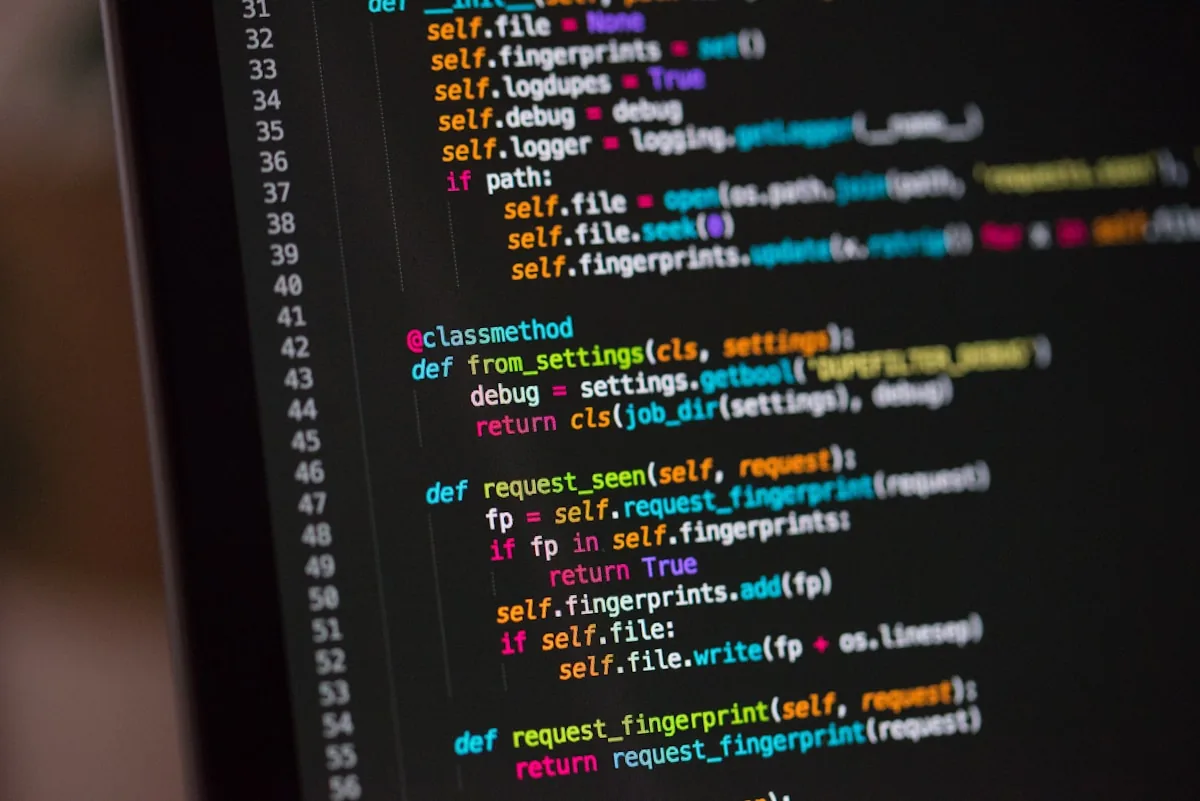
In practice, a developer today rarely writes routine code line by line. They describe what they need — "a paginated endpoint that returns orders filtered by status and date range" — and the AI produces a working implementation that the developer reviews, tests, and adjusts. For boilerplate work — CRUD operations, standard form validation, typical API integrations, configuration files — this can cut implementation time by more than half. Multiple industry surveys of professional developers report productivity gains in the range of 30% to 55% on routine coding tasks when AI assistants are used consistently, with the effect strongest for junior-to-mid-level work and more modest (though still real) for complex, novel problems.
It's worth being precise about where the gains are largest, because founders sometimes extrapolate too aggressively. AI assistants are extremely strong at pattern-matching to code that resembles things seen many times before — which describes a large share of what goes into any typical product. They're considerably less reliable on genuinely novel algorithmic problems, deeply domain-specific business logic unique to your company, or code that needs to interact correctly with unusual, poorly documented systems. A payments reconciliation engine with company-specific edge cases isn't going to be one-shot by an AI assistant the way a login form will be.
The commercial translation is straightforward: the cost of building the "unglamorous 70%" of any product — the CRUD screens, the admin panels, the integrations, the plumbing — has dropped substantially. The cost of the genuinely hard, differentiated 30% — the part that actually constitutes your competitive advantage — hasn't dropped nearly as much, and arguably matters more than ever, because it's now the bottleneck.
Testing: From an Afterthought to a Built-In Safety Net
Ask almost any engineering manager what gets cut first when a deadline is tight, and the honest answer is usually "test coverage." Writing thorough unit and integration tests has always been necessary but unglamorous work, and it's the first casualty of schedule pressure — which is exactly how startups end up with fragile codebases that break in unpredictable ways as they scale.
AI tools are changing this dynamic because generating a reasonably comprehensive test suite for a given piece of code is now fast enough that skipping it is no longer the path of least resistance. AI assistants can generate unit tests covering typical inputs and a wide range of edge cases, flag functions with unusually low test coverage, and even suggest test scenarios a human reviewer might not have thought to check — unusual input combinations, boundary conditions, error-handling paths.
For a founder, this shows up downstream as fewer emergency bug fixes after launch, fewer support tickets in the first weeks of a product's life, and — less visibly but just as importantly — fewer late-night pages to your one senior engineer three months after everyone thought the feature was "done." Products built with disciplined AI-assisted testing tend to have measurably lower defect rates in production compared to teams that treated testing as optional under deadline pressure.
Deployment and Maintenance: From Firefighting to Forecasting
The deployment and maintenance phase used to be where engineering teams spent an outsized share of their time simply reacting — watching dashboards, getting paged at 2 a.m. when something broke, manually digging through logs to find the root cause of an outage that was already affecting paying customers.
AI-powered monitoring and DevOps tools have shifted a meaningful part of this work from reactive to proactive. These systems can analyze log patterns in real time, flag anomalies that historically preceded outages before they actually cause one, and in many cases automate the routine operational tasks — scaling resources, rotating credentials, applying low-risk patches — that used to require a human to notice and act.
This matters most for products where downtime has a direct, visible cost: e-commerce platforms losing sales during an outage, fintech products facing regulatory scrutiny after a service disruption, B2B SaaS products with contractual uptime guarantees written into enterprise contracts. For companies in these categories, the shift from firefighting to forecasting isn't just an efficiency gain — it's risk management that shows up directly on the income statement.
The Business Case, Stated Plainly
Pulling the thread through all five stages, the commercial argument for founders comes down to a few concrete effects.
Time-to-market compresses. When planning, architecture, coding, testing, and monitoring all move faster simultaneously, the compounding effect on total project timelines is larger than any single stage would suggest on its own. A project that once took six months can realistically land in ten to twelve weeks for many typical SaaS and consumer product categories — not universally, but often enough that competitors moving at the old pace are visibly losing ground.
MVP costs drop, but not evenly. The routine, pattern-matchable parts of a product get dramatically cheaper to build. The genuinely novel, differentiated parts don't get proportionally cheaper — which means a founder's engineering budget increasingly buys more "standard product" for the same money, while the premium still goes toward whatever makes the product actually defensible.
Small teams punch above their historical weight. A three-person engineering team today can plausibly deliver what used to require six or seven people. This changes hiring plans, equity allocation, and how founders think about the tradeoff between hiring more engineers versus investing in tools and training for the team they already have.
Timeline forecasting gets more reliable. AI-assisted complexity estimation, while imperfect, tends to produce tighter, more defensible timeline estimates than the traditional practice of asking a senior engineer to eyeball a feature list and guess. For a founder managing investor expectations and board updates, more reliable timelines are worth real money in reduced planning risk.
The Risks a Careful Founder Should Actually Worry About
None of this is a free lunch, and founders who treat AI-assisted development as a solved problem tend to discover the gaps at the worst possible moment — usually during a security incident, an investor's technical due diligence, or a scaling crisis six months after launch.
Security vulnerabilities can be baked in silently. AI models learn from a vast body of real-world code, and real-world code contains plenty of security mistakes — SQL injection patterns, weak input validation, insecure default configurations. A model trained on that code can reproduce those same mistakes with total confidence, producing code that looks clean and passes a casual read-through while carrying a real vulnerability. Without a rigorous review process and automated security scanning as a mandatory step — not an optional nice-to-have — faster development can quietly become less secure development. This is worth asking your CTO about directly, not assuming is handled.
Code provenance and licensing exposure is a real due-diligence risk. Because these models train on open-source code released under a wide range of licenses, there's a nonzero chance that generated output reproduces something recognizably close to licensed code — code that may carry obligations incompatible with your company's IP position. This has already become a standard line item in technical due diligence for acquisitions and later-stage funding rounds. If you're planning to raise a Series A or eventually sell the company, your buyer's lawyers will ask about this, and "we don't know" is not an answer that inspires confidence.
Confident-sounding wrong answers are more dangerous than obviously broken code. The failure mode that should worry a founder most isn't code that visibly doesn't work — that gets caught immediately. It's code that compiles, passes a shallow test, and looks entirely reasonable, but contains a subtle logical error that surfaces only under a specific, unanticipated condition, often in production, often affecting real customers before anyone notices.
Skill atrophy is a slow-motion risk that compounds over years, not weeks. Junior engineers who lean on AI assistants without engaging deeply with the underlying logic risk never developing the muscle for solving genuinely novel problems — the exact skill your company will need most when it hits a scaling challenge no AI model has seen a thousand examples of before. This isn't an argument against using these tools; it's an argument for deliberately structuring how junior team members use them, so the tool becomes a teacher rather than a crutch.
Data handling isn't automatically safe just because a tool is popular. If your team uses cloud-based AI coding tools, it's worth knowing precisely how your proprietary code and any customer data that touches it are handled by the vendor — retention policies, whether code is used for further model training, where data is physically processed. For companies in regulated spaces like healthcare or financial services, this isn't a nice-to-have question; it can be a compliance requirement with real legal teeth.
A Practical Checklist for Founders
Rather than trusting a vague "yes, we use AI tools" from your engineering team, it's worth asking for specifics. A few pointed questions tend to separate teams that have genuinely integrated AI thoughtfully from teams riding the trend without the underlying discipline:
Ask what share of routine tasks are now AI-assisted, and whether the team can point to a concrete before-and-after change in delivery speed — vague enthusiasm isn't the same as a measurable outcome. Ask whether AI-generated code goes through the identical review bar as human-written code, with genuinely no exceptions carved out for "the AI probably got this right." Ask what the team's policy is on which code and data can be shared with external AI services, and whether that policy is actually written down anywhere rather than living in someone's head. And ask how the team is training junior engineers to use these tools as a learning accelerant rather than a substitute for understanding — because the answer to that question today will shape the quality of your engineering organization three years from now.
Where This Is Heading
The trajectory is fairly clear from where the technology sits today. AI coding tools are moving from "assistant that completes a line of code" toward "agent that can be handed a well-scoped task and reasonably be trusted to plan it, execute it across multiple files, test its own work, and flag genuine uncertainty rather than confidently guessing." That shift is already underway, and it changes the role of a human engineer from primarily a code producer toward primarily a reviewer, architect, and decision-maker — someone who directs and validates rather than types every line.
For founders, the strategic implication isn't complicated, even if the technology is: companies that build disciplined, security-conscious, well-governed processes around AI-assisted development today are compounding an advantage that will be genuinely difficult for slower-moving competitors to close later. Speed without discipline just produces faster technical debt. Speed with discipline is a real, durable edge — and right now, discipline is the part most companies are still figuring out.
The Bottom Line
AI coding assistants have changed the economics of every stage of the software development lifecycle — not by eliminating the need for skilled engineers, but by shifting what skilled engineers spend their time on, and by making the routine, high-volume parts of software development dramatically cheaper and faster to produce. For a founder, that translates into shorter timelines, leaner teams, and more reliable planning — provided the underlying risks around security, code provenance, skill development, and data handling are managed with the same seriousness as the productivity gains are celebrated. This isn't fundamentally a question for your CTO to handle quietly in the background. It's a strategic decision that shapes your burn rate, your fundraising story, and your competitive position — which means it deserves a founder's direct attention, not just a nod of approval in a board update.