Larkfield Goods // E-commerce & retail ops
n8n automation for order-to-fulfillment operations at a DTC e-commerce brand
The client sells through Shopify and three marketplaces simultaneously. Before the project, each channel lived in isolation: operators manually copied Etsy and Walmart orders into Shopify, inventory was reconciled in Google Sheets once a day, and returns were handled through email chains between support, the warehouse, and accounting. As volume grew past 600+ orders/day, the process started breaking down — selling stock that was no longer available, duplicate orders, and refund delays of 5–7 days.
The team had looked at Zapier, but the cost at that trigger volume (600+ orders × 4–6 steps each) blew past budget, and the conditional logic needed (different rules per marketplace) required custom branches that Zapier prices especially steeply.
The product surface
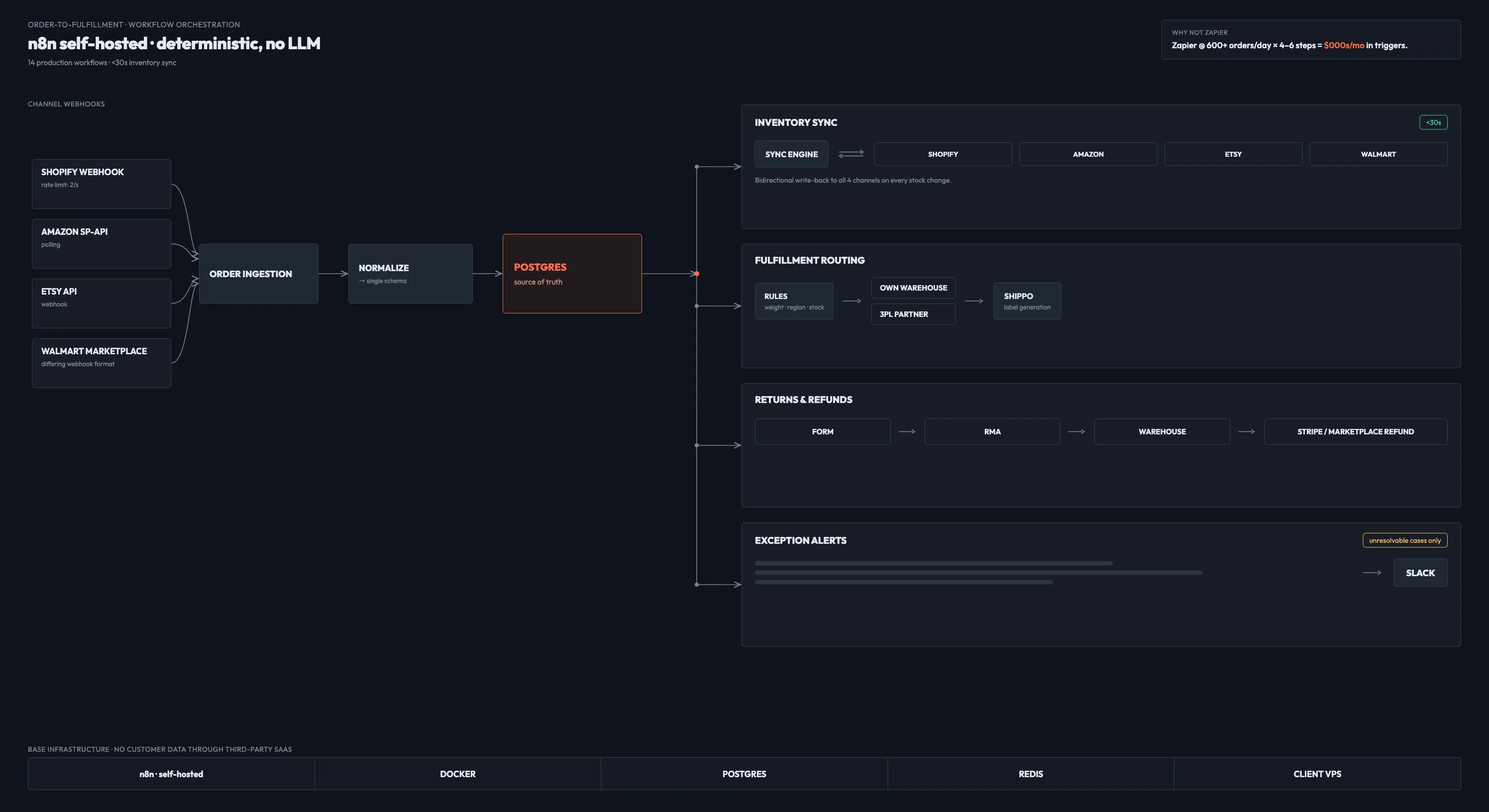
A set of production n8n workflows (self-hosted on the client's VPS) that replaced 4 disconnected processes with one orchestrated layer.
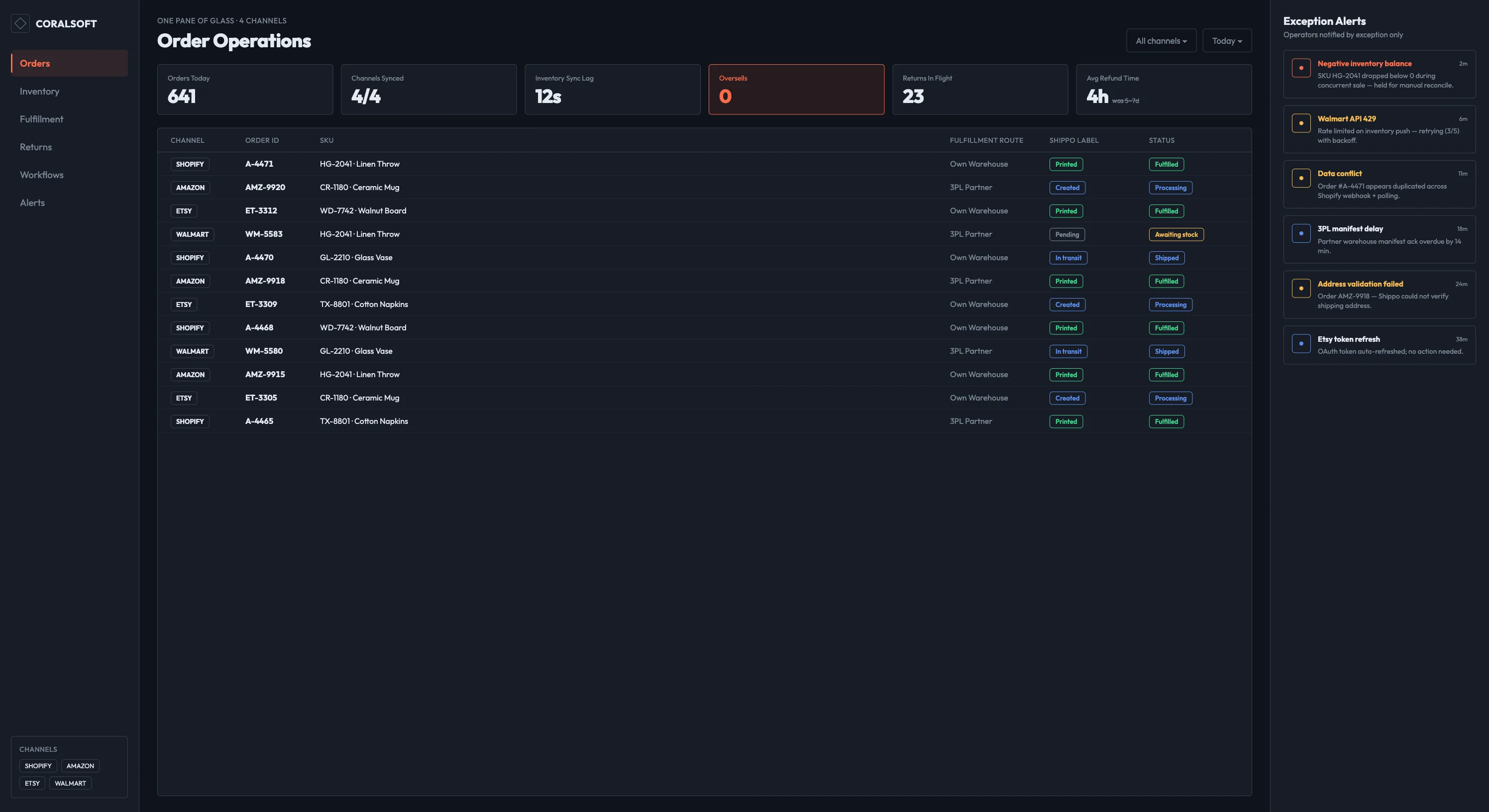
Order ingestion
Webhook intake from all 4 channels, normalized into a single schema, written to Postgres as the source of truth.
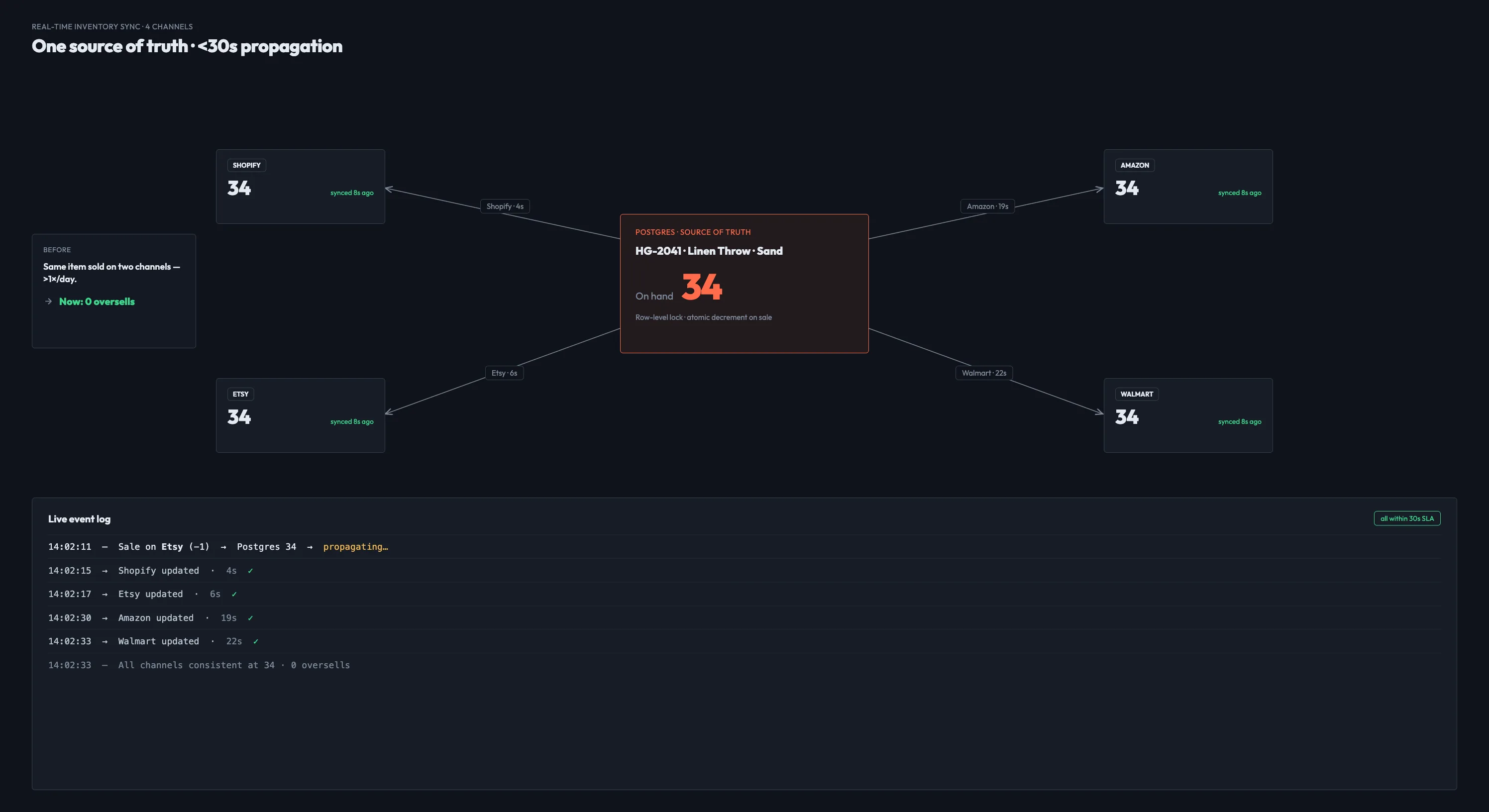
Inventory sync
Bidirectional stock sync: any change on one channel (a sale, a manual adjustment) reflects across the other three plus the Shopify admin in under 30 seconds.
Fulfillment routing
Automatic order routing between the client's own warehouse and a 3PL partner based on rules (weight, shipping region, stock availability), with shipping labels generated via the Shippo API.
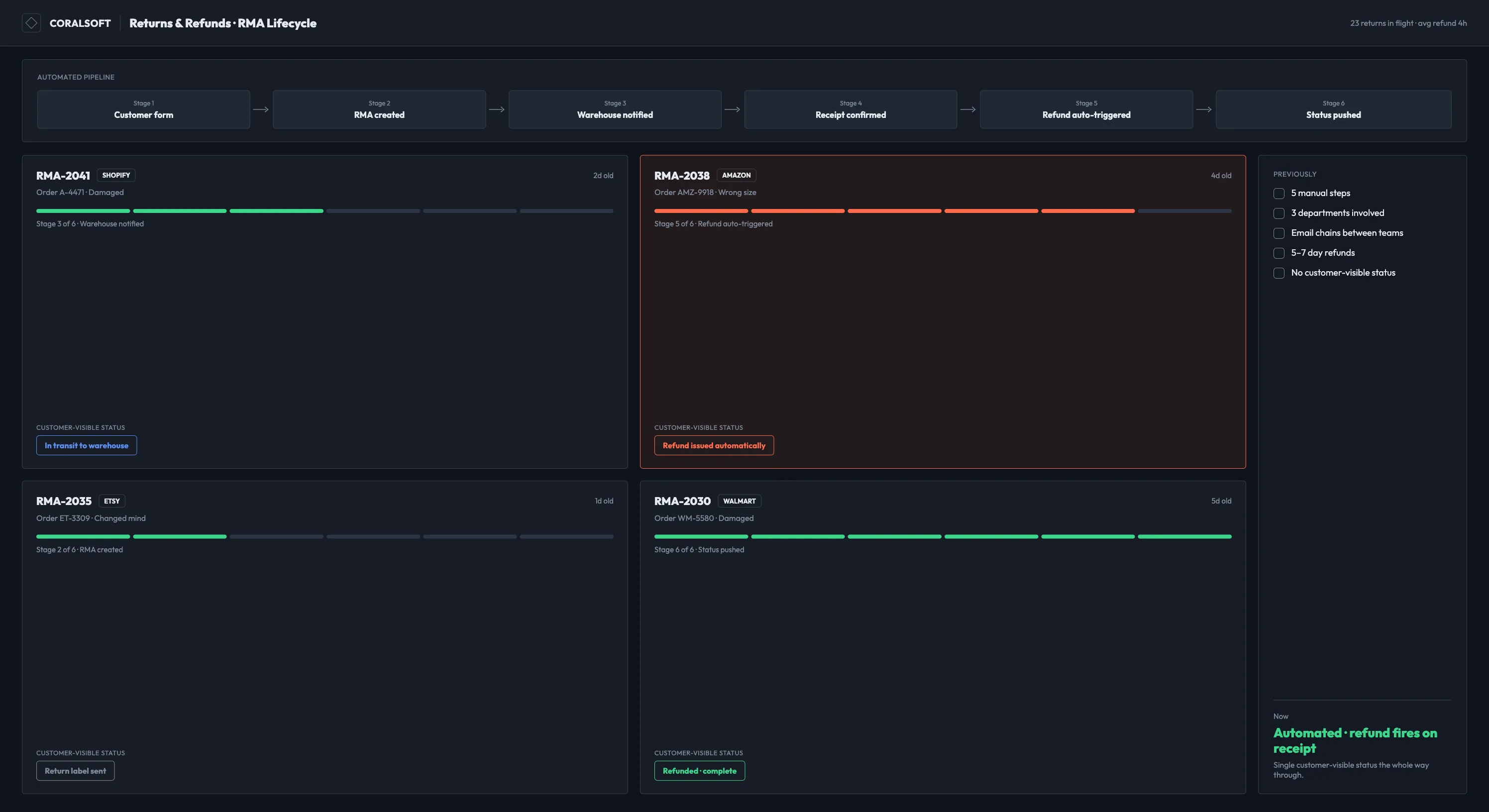
Returns & refunds
The customer initiates a return through a form — n8n creates an RMA, notifies the warehouse, and once receipt is confirmed, automatically triggers a refund via Stripe/marketplace APIs and updates the customer's status.
Exception alerts
A Slack channel notifies an operator only about cases the workflow can't resolve on its own: data conflicts, API failures, negative inventory balances.
Decisions, not just dependencies.
Triggers come from webhooks (Shopify, Amazon SP-API, Etsy, Walmart) plus cron triggers for periodic reconciliation and retries. The orchestration layer is n8n, self-hosted on Docker — 14 production workflows split into reusable sub-workflows for shared logic like order normalization, logging, and error handling. Postgres is the source of truth for orders and inventory, with Redis holding short-lived locks to prevent race conditions during parallel sales.
Integrations span the Shopify Admin API, Amazon SP-API, Etsy API, Walmart Marketplace API, Shippo for shipping labels, and Stripe for refunds. Slack carries exception alerts for operators, and email templates handle customer status updates. A centralized error workflow adds retry logic with exponential backoff and a dead-letter queue for cases that need manual review.
What was hard, and how we shipped it.
- 01
Cheaper than Zapier at scale
Built on self-hosted n8n running on the client's own server — roughly 70% savings on automation tooling versus the projected cost of Zapier at 600+ orders/day, with full control over every step of the logic.
- 02
No more overselling
Bidirectional stock sync reflects any change across all channels in under 30 seconds — zero instances of overselling out-of-stock items in the four months after launch, down from about 12 per week.
- 03
Returns without support
92% of returns processed fully automatically: a customer form creates an RMA, notifies the warehouse, and triggers a refund via Stripe/marketplace APIs on confirmed receipt.
- 04
Race-condition-safe
Redis short-lived locks prevent the same item being sold on two channels at once, load-tested against peak volumes in a Black Friday simulation.
- 05
Editable by the client
A phased shadow-mode cutover plus documentation and training so the client's team can edit simple rules — like adding a new shipping channel — without a developer.
Looking at a project that sits at this kind of seam?
Bring us the architecture, the constraints, and the ship date. We will bring the rest.
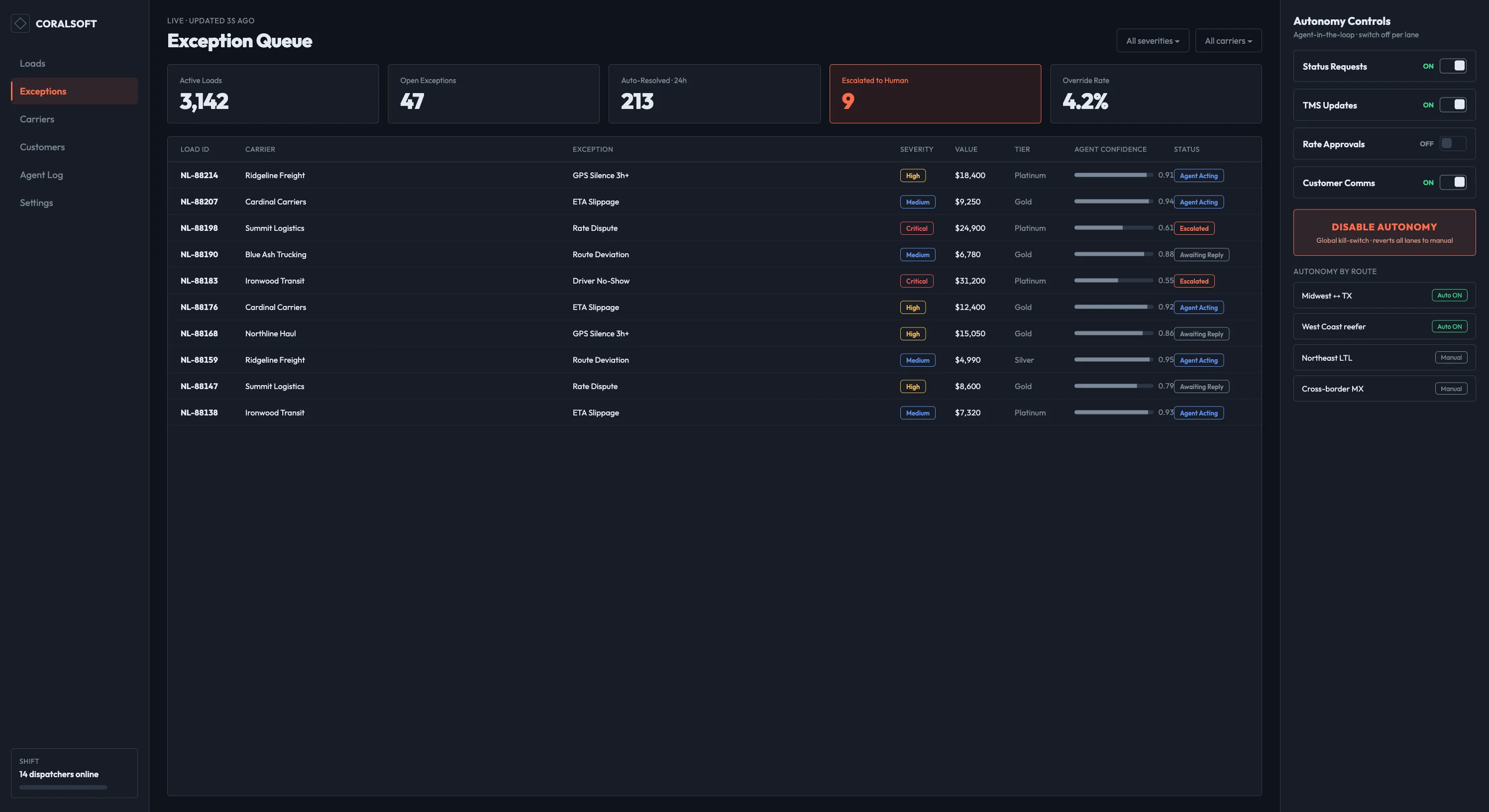
NorthLane Freight
Logistics & supply chainAn autonomous AI agent — not a chatbot, but an agent that takes real actions in external systems — built for a mid-sized US freight brokerage to resolve dispatch exceptions across the TMS, ELD, email, SMS, and carrier portals.
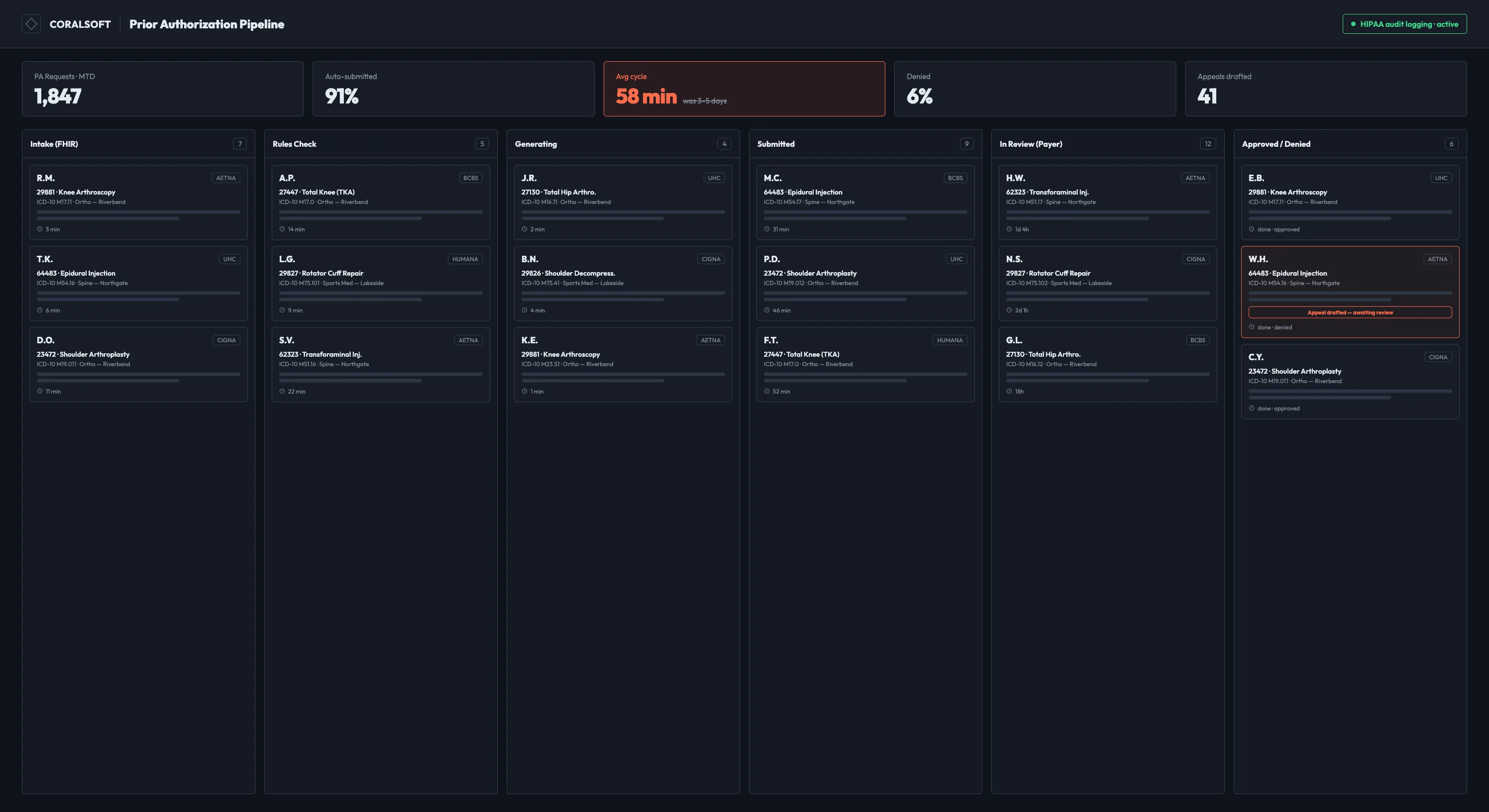
Meridian Billing Partners
Healthcare billingAn autonomous AI agent — acting inside payer portals, generating documents, and tracking statuses, not a chatbot — that runs the full HIPAA-compliant prior authorization cycle for a medical billing company serving 22 outpatient clinics.